

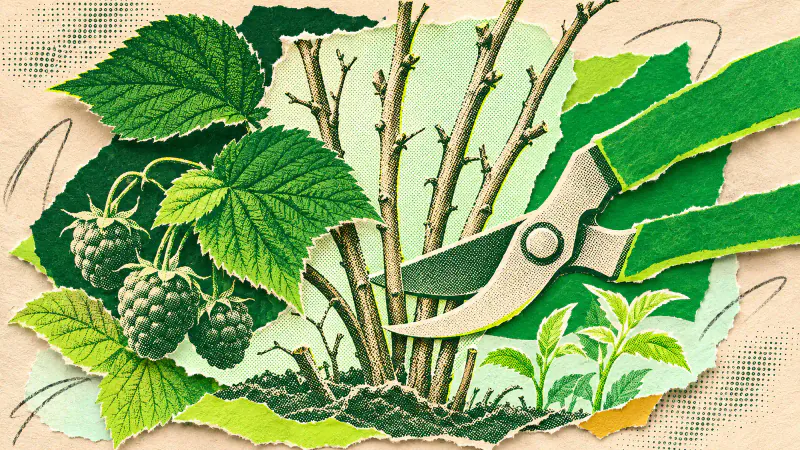
For one autumn crop, cut all the canes of an established autumn-fruiting raspberry down to ground level while the plant is dormant, before new growth begins. Start pruning autumn raspberries by confirming the variety. This method removes the earlier summer crop that retained canes could otherwise carry.
In November, you can find the plant label, record this year's harvest and prepare your tools. You do not need to cut immediately. The RHS raspberry guide recommends February for this annual cut in UK conditions. Match the working date to your local climate and the plant's growth.
Confirm which raspberry you have
Check the nursery label, order record or cultivar description for autumn-fruiting, fall-bearing or primocane-fruiting raspberries. These produce a late crop on stems grown during the same year. Summer-fruiting raspberries need a different pruning routine. Cutting every cane of a summer type removes next season's fruiting wood.
Write the variety and the intended single-crop method on a durable label beside the row. Keep that label when the old canes are gone. If several varieties share the bed, identify their boundaries before opening the pruners.
Do not use cane colour alone to decide. A brown stem does not tell you which crop system the whole plant needs. If the identity is uncertain, ask the supplier or a local fruit specialist and keep a record through another growing season. A later decision is better than cutting the wrong row.
Wait for the dormant pruning period
Choose a working day when you can reach the bases without trampling wet ground. Keep the job small enough that you can collect all the cut stems. Clear the path and set a tub within reach before you start.
Cold-climate calendars can be later than the RHS example. University of Minnesota Extension places the fall-only cut in March, before growth begins. February is therefore a regional guide, not a date for every garden.
Inspect your pruners for a sound lock, clean blades and a smooth action. Follow the tool's maintenance instructions. Our hand-pruner guide explains fit and cutting limits if your current pair crushes stems or needs more force than you can comfortably apply.
Cut the canes close to the ground
Work along one side of the row so you can see what remains. Release any ties holding an old cane before removing it. Trace each stem down to its base and cut at ground level, without cutting into the crown or digging beneath the soil.
Remove every old cane in the confirmed autumn-fruiting section for this single-crop method. Do not just shorten the tops. Iowa State's pruning advice distinguishes that full cut from the alternative system that retains stems for two crops.
Lift each cut cane clear rather than pulling a tangled bundle through neighbouring plants. Put stems directly into the tub. Check the row from the opposite side before you finish; a short piece hidden behind a support is easy to overlook.
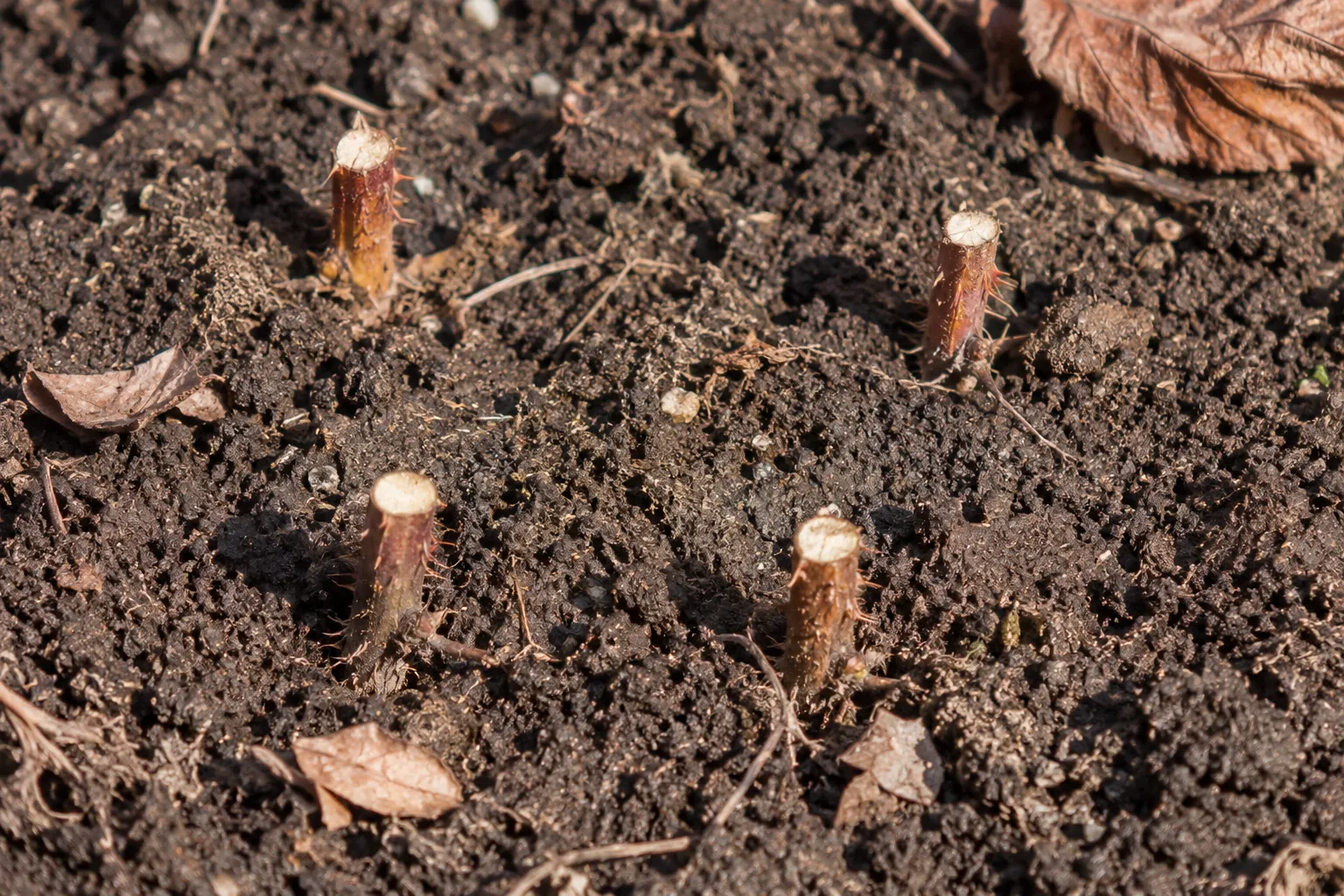
Clear the row and record spring growth
Gather loose stem pieces from the soil and path. Keep suspect diseased material separate while you check local disposal advice. Clean the pruners according to their instructions and put them away dry.
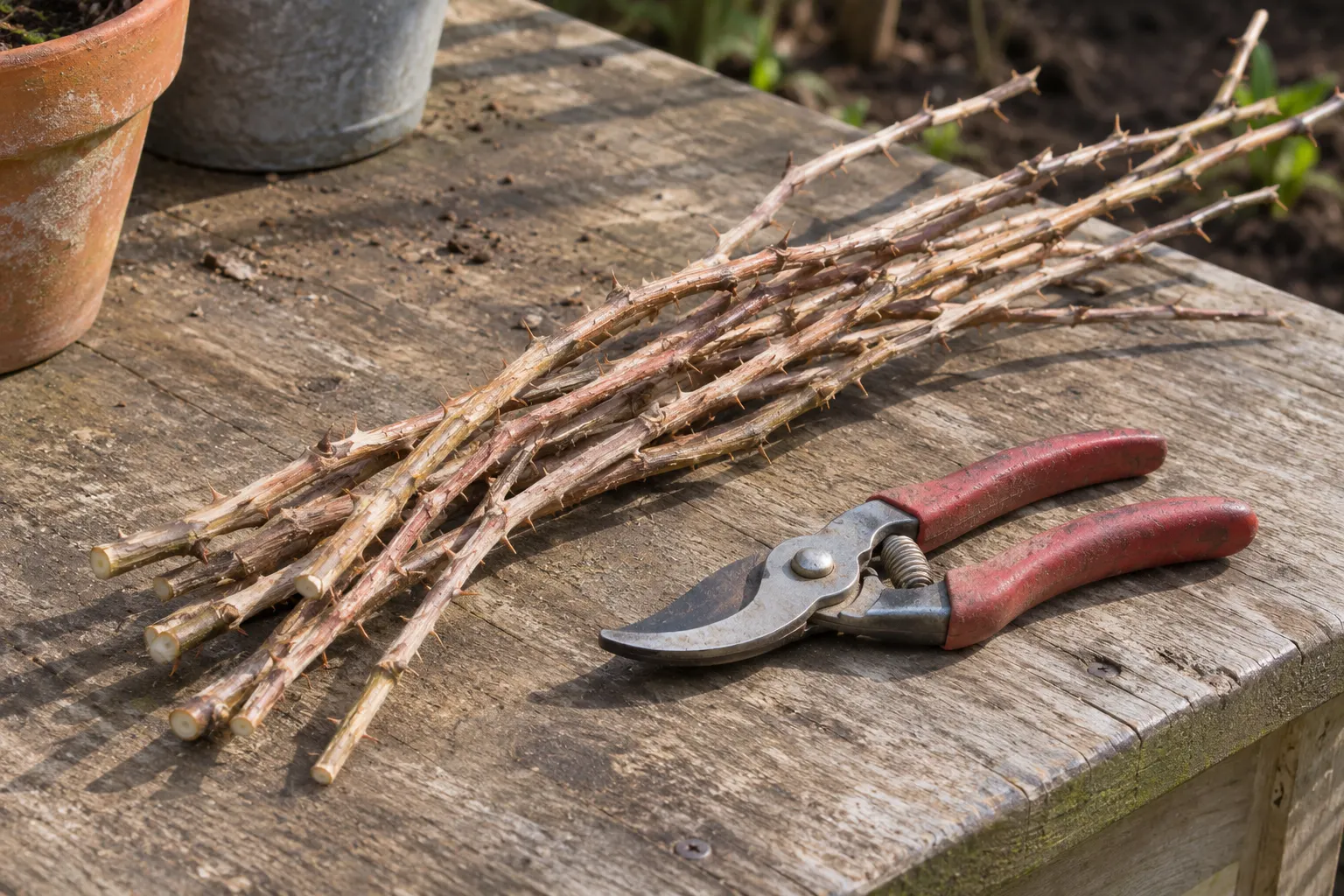
Leave the plant label in place and note the pruning date. In spring, look for new stems and keep access to the row clear. Photograph the same small section when growth starts, then record when it flowers and fruits. Those notes make next winter's identification easier.
If you are reconsidering the surrounding garden, Gardenly's styles can help you explore its appearance from a photo. Use your real crop record and local growing advice to manage the raspberries. A redesigned image cannot identify the variety or confirm where to cut.
