

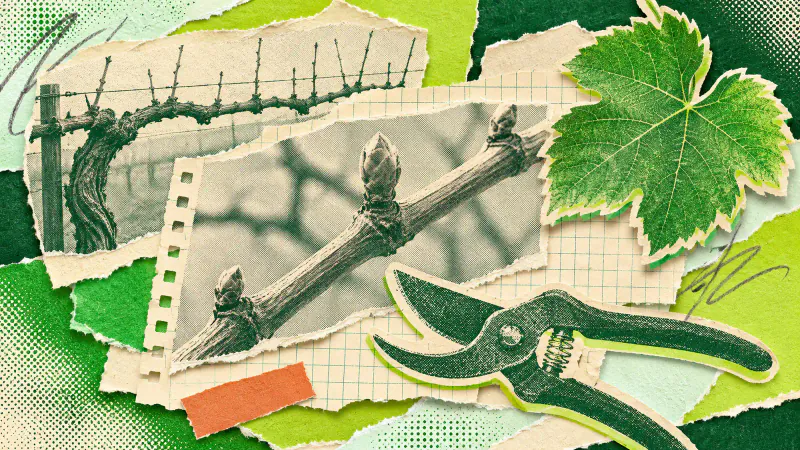
Start pruning grape vines by confirming their training system. On an established rod-and-spur vine, keep the permanent woody framework and shorten the previous season's side growth into small fruiting spurs. A vine trained with annually replaced fruiting canes needs a different approach.
Check local timing before making a cut. November can be a useful month to trace the stems and find the cultivar label, even where pruning must wait until later in winter. This guide concerns routine care of an established cordon, not training a newly planted vine or restoring a tangled, neglected one.
Identify the wood you need to keep
Follow the trunk from ground level to the thick permanent stem or arms attached to the support. These are the cordons. Find the shorter spur systems along them, then trace the thinner canes that grew during the last season. Take a clear photograph before removing anything.
The RHS guide to grape training systems distinguishes rod-and-spur training from Guyot. Guyot replaces its fruiting arms each year. Cutting every vine back to short stubs would erase that distinction and can remove wood needed for its next crop.
If you cannot identify the system, stop with the photograph and ask a local fruit nursery or adviser. Keep the cultivar name with it. University of Minnesota Extension explains that pruning depends on the way the vine is grown and the space available. A familiar-looking trellis alone does not settle the method.
Set the date from your climate
For UK-like conditions, the RHS places the main cut in late November or December, when the vine is fully dormant. Its advice also allows later pruning where spring frost regularly damages new shoots. Greenhouse vines can start sap flow earlier than outdoor plants.
Cold regions have a different calendar. University of Missouri Extension gives late December to March and generally prefers late winter because the fruiting wood may suffer winter injury. Minnesota's home-growing calendar places pruning in March before growth starts.
University of Vermont guidance for this autumn warns that leafless vines can still be adjusting to cold. Leaf fall alone does not prove full dormancy.
Choose regional guidance for your cultivar and site, then check the actual plant. A date copied from a warmer garden is a poor reason to start. If the wood is damaged, the vine has an unexplained decline or the buds have already opened, get specific advice before applying a routine dormant-pruning instruction.
Shorten the side growth deliberately
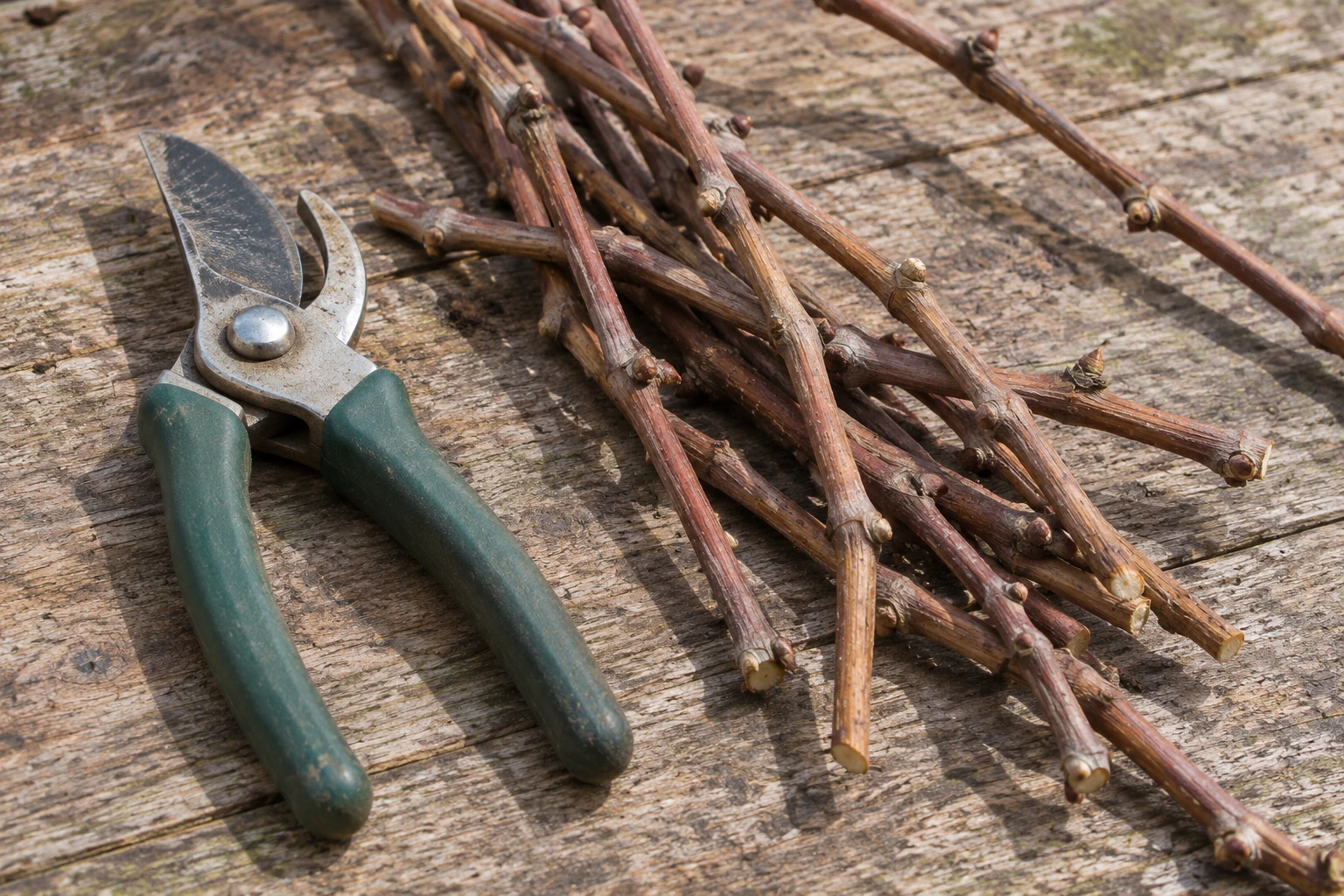
Use clean, sharp pruners suited to the stem thickness. Check their action first; our hand pruning shears guide covers fit and cutting limits. Work from stable ground and leave inaccessible growth for someone with suitable equipment.
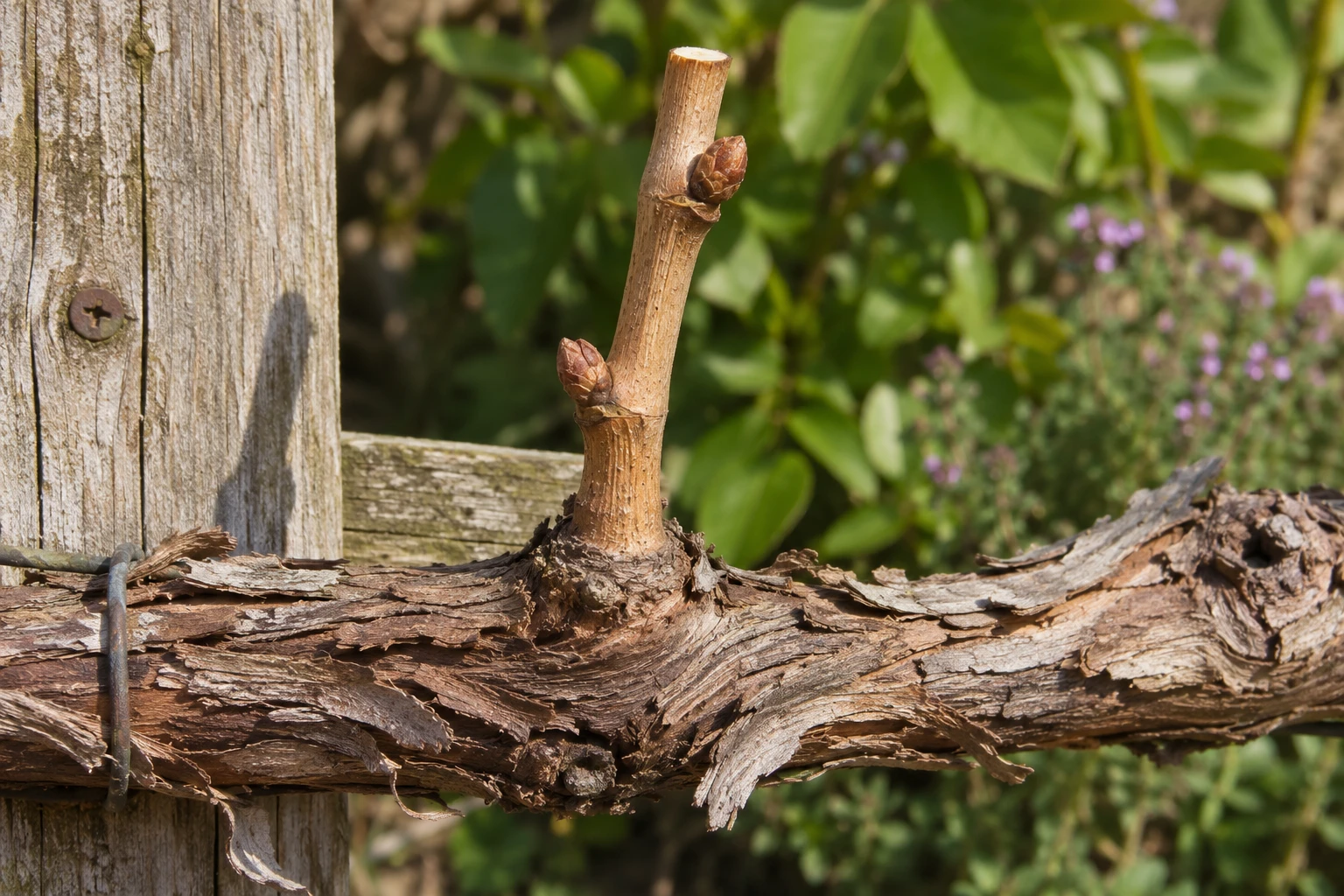
On the established rod-and-spur system described by the RHS cordon guide, shorten side shoots to one strong, plump bud, retaining two if the first looks weak. Count from the shoot's base and identify the buds before positioning the blades. Keep the permanent cordon. Other cultivars and training systems can require different bud numbers, so use their own instructions.
Work along one section at a time. Lift away cut material so it does not hide the next shoot or pull on retained wood. Leave major cuts into the old framework and crowded, complicated spur systems for a separate assessment. Routine annual pruning is easier to follow when it stays separate from renovation.
Record what happens next
Photograph the finished section from the same position. Note the date, cultivar, retained bud count and any uncertain wood. In spring, compare those notes with the shoots that emerge. Grapes also need management during active growth; winter pruning does not finish the year's work.
If the vine's surroundings need a different planting mood, Gardenly's styles can help you explore their appearance from a garden photo. Keep that image separate from your pruning record. It cannot identify fruiting buds, assess winter damage or choose which cane should stay.
