

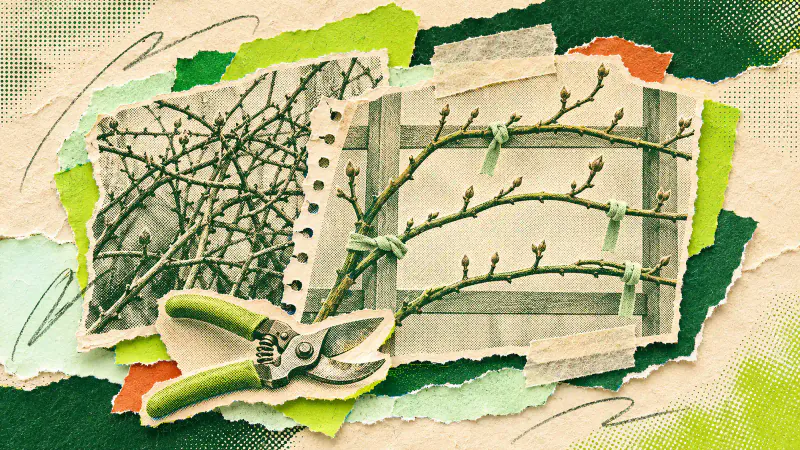
For an established repeat-flowering climber, pruning climbing roses means keeping a useful framework of main canes, securing growth that fills gaps and shortening the smaller shoots that flowered. Identify the rose and check local timing before cutting. A climbing rose and a once-flowering rambler can occupy the same kind of support but need different treatment.
In early November, you may only need to secure loose growth and plan the winter job. The calendar date on a gardening article cannot tell you whether your particular rose is ready. Work through one reachable section first, with the plant's label or nursery guidance beside you.
Check the rose and the season
Find the cultivar name in your planting records, an old order or the original label. Flowering history helps: repeated flushes suggest a repeat-flowering climber, while many ramblers flower once. There are exceptions, so confirm the named plant before removing healthy wood. A newly planted rose also needs time to establish its framework; this guide is for routine care of an established plant.
The RHS climbing-rose guide places routine UK pruning after flowering in winter, usually December to February, with loose autumn shoots tied in or shortened against wind damage. Illinois Extension advises early spring for repeat-flowering climbers in its climate. Follow regional advice and your cultivar's requirements. If you cannot identify the plant, photograph it through a flowering season and ask a knowledgeable nursery before attempting a substantial prune.
Trace the framework before reaching for the shears
Stand back far enough to follow each long cane from the base to its tip. Notice which ones form the permanent fan and which smaller branches grow from them. A side shoot is easy to mistake for a main cane when everything is tangled.
Check the support and existing ties while the structure is visible. Stop if wires, posts or fixings need repair before they can hold the plant. Our climbing-plant support guide covers that separate decision. Leave work above a comfortable standing reach to someone with suitable access equipment and experience.
Gather clean, sharp secateurs, gloves that suit thorny work and soft tying material. Check the tool's stated cutting capacity. If stems require force, change to suitable equipment rather than twisting the blades through them; the pruning-shear guide helps with hand fit and tool choice.
Keep useful canes and secure new growth
During the appropriate pruning season, remove dead, dying, damaged or diseased growth. If a suspicious patch cannot be identified, seek plant-health advice before continuing across the whole rose. Keep questionable material apart from healthy clippings while deciding how to dispose of it locally.
Choose sound young growth that can fill an actual gap. Bring it towards the support gently. David Austin's training guidance explains how spreading main stems towards horizontal encourages flowering side shoots along their length. Work with a cane's flexibility and the available support; an old rigid stem should not be forced into a new bend.
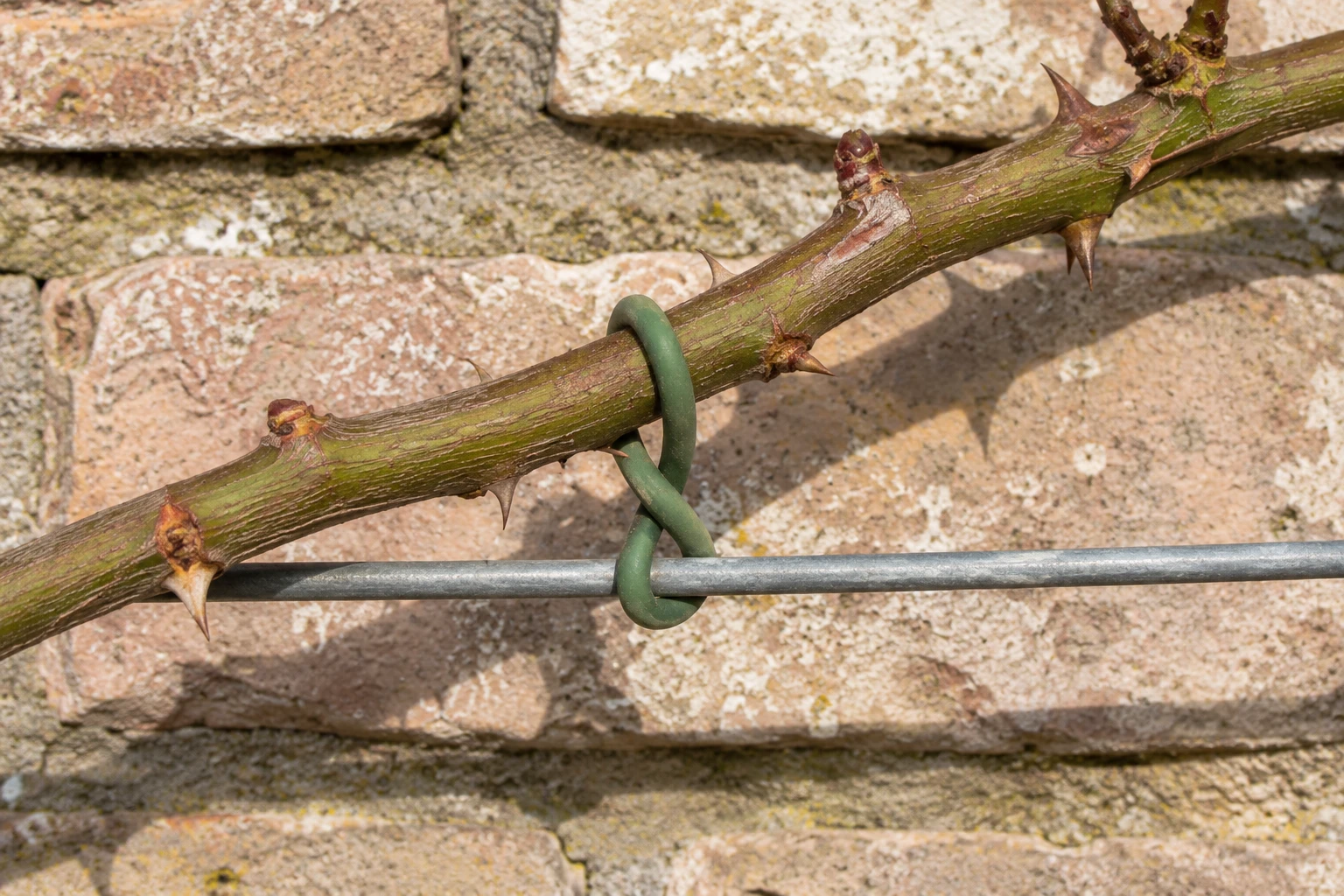
Use soft ties with room for the stem to thicken. Check older ties for rubbing or constriction, then revisit them during growth. The aim is a supported fan that you can still inspect and maintain.
Shorten the flowered side shoots
With the retained framework clear, work along one main cane at a time. Identify the smaller side shoots that carried flowers and shorten those according to the cultivar's guidance. The RHS routine method reduces flowered side shoots by about two thirds. David Austin's guide for its repeat-flowering roses uses roughly half and allows useful longer shoots to extend the fan. Choose the method suited to your rose instead of mixing measurements as you go.
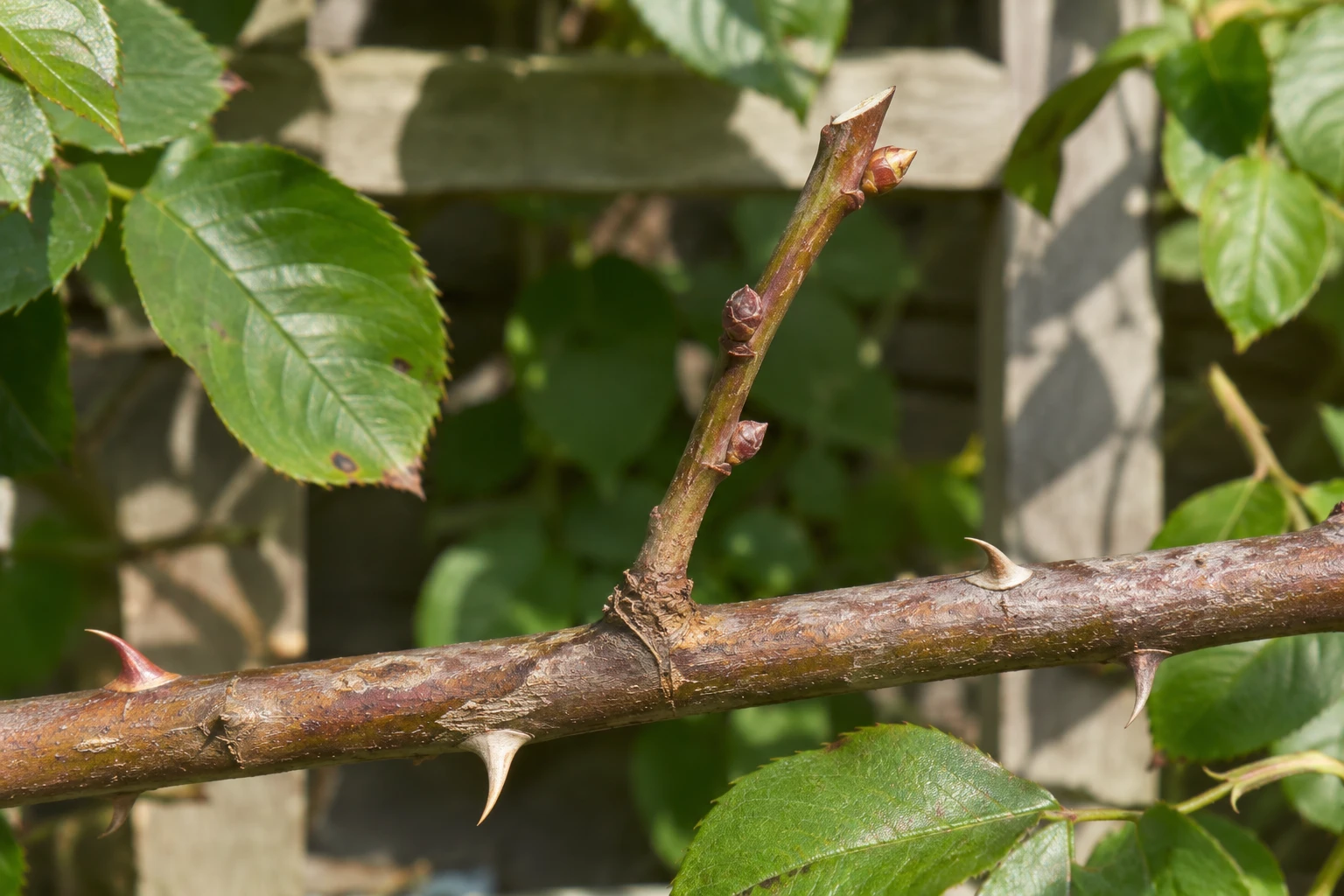
Make clean cuts just above a suitable bud. The RHS general pruning advice recommends a cut within 5 mm above the bud, sloping away from it. Avoid leaving a long empty stub. Check the next shoot's attachment before cutting so that a passing cane does not disappear by mistake.
Collect clippings and fallen rose leaves, then inspect the support again. Photograph the finished framework and keep the cultivar name with it for next winter. Gardenly's garden styles can help explore surrounding planting appearance; pruning decisions still depend on the living rose in front of you.
