


Choose a garden hoe for weeding by matching its cutting motion and blade width to the open soil you can actually reach. Then try the complete tool. You should be able to place the blade near the soil surface without bending over it or reaching far ahead.
This guide covers buying a manual hoe for shallow work among established garden plants. It starts with the weeds and gaps you already have. A wide head that clears an open strip can be awkward in a border full of close stems.
Check whether a hoe suits the job
Look at a small patch before shopping. Identify the unwanted plants and the plants you want to keep. Young annual weeds on accessible open soil are a different task from a large clump with persistent underground roots.
The RHS guide to weeding beds describes hoeing annual and short-lived weeds just below the surface in dry weather. It advises a fork for more persistent roots and careful hand work close to border plants. If your main problem is tangled roots beside a shrub, start with our hand-weeding guide.
Make a short note of where the tool will work. Include exposed soil between plants, the tightest gap and the place you will stand. Leave out paved joints and lawn weeds unless the exact tool is intended for them. Buying a hoe in November does not mean the ground is ready for hoeing; wait for suitable conditions.
Compare the cutting motion
Read the description for the exact head. A Dutch hoe usually works with a shallow pushing action. Other heads are designed for pulling or for both directions. Similar names can hide different blade shapes, so ask to see how the cutting edge meets the soil.
Check whether the edge cuts on a push, a pull or both. The maker should explain that action for the head you are considering. Look at a demonstration if the description leaves you unsure.
With permission in the shop, hold the blade near floor level and make a short, slow practice movement away from other people. Check that the handle position lets the edge sit at its intended angle. A head that only lies correctly when you hunch is a poor match for you.
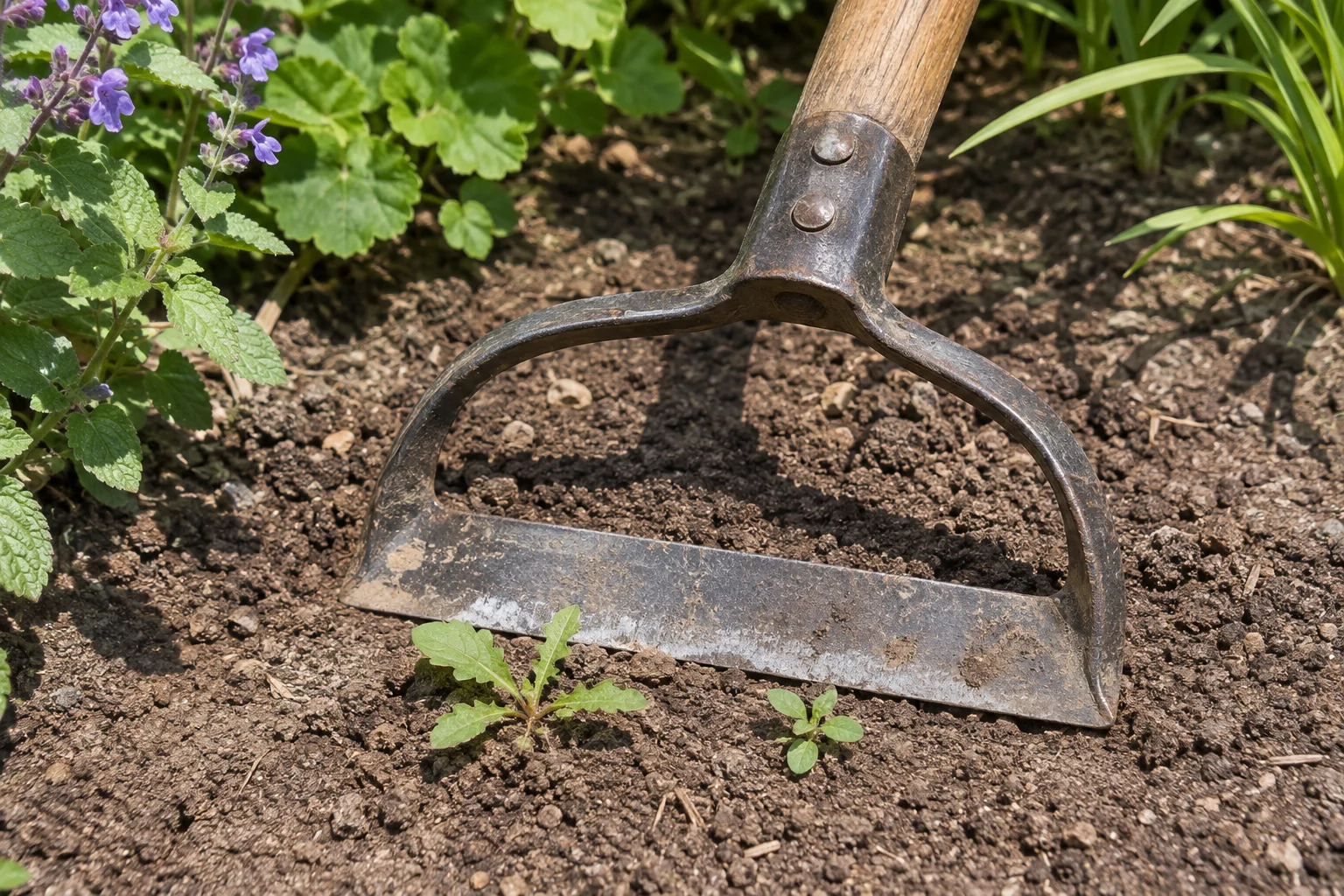
Match the head to the working gap
Measure the narrowest useful strip of open soil at home. Allow room around the stems you will keep. Compare that space with the actual blade width, including any projecting corners, rather than the width of the packaging.
A broader blade covers more ground per pass, but needs more clear space. A narrower one can enter smaller gaps; it still needs room to move. If leaves hide the soil or the blade would pass directly against plant bases, plan to use your hands or a small hand tool there.
Look at the whole head from above and from the side. Can you see where its cutting edge will go? Will the neck pass beneath the foliage without pushing stems aside? A photograph of your border and a few measurements can make these questions easier to answer at the shop.
Try the assembled handle and connection
Compare tools with their handles fitted. Pick each one up, move it slowly into the working position and bring it back towards you. Check your grip along the shaft as well as near its end. Wear the gloves you usually use if the shop permits it.
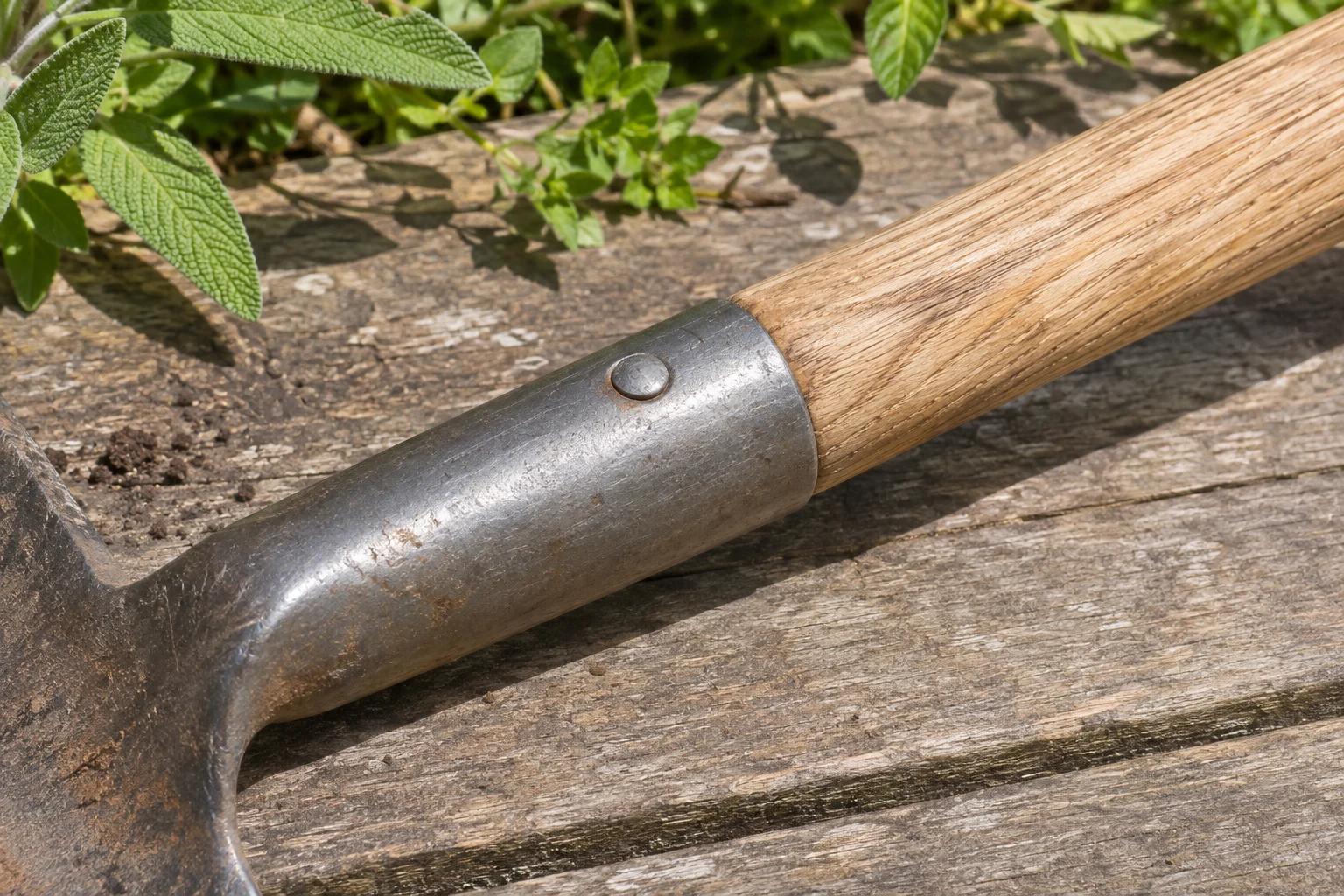
Handle length depends on your height and the work. GARDENA's push-pull hoe page makes that distinction for its interchangeable system. For a detachable head, confirm the exact handle system and how the joint locks. For a fixed wooden shaft, inspect the wood and metal socket for visible damage or movement.
Check care before you buy
Find the maker's care instructions for the exact tool. Check how to clean and dry it, whether its edge needs maintenance and which replacement parts are available. Keep the model details with those instructions. Our garden-tool cleaning guide covers ordinary soil removal and drying after work.
Check where the assembled hoe will fit in your storage. The blade should have a secure place where you can retrieve the tool without reaching across its edge.
If you also want to change the border's appearance, Gardenly's FAQ explains how a photo and a style produce a visual direction. Keep your real gap measurements beside that picture. Choose the hoe from the physical space and the work you have checked.
