

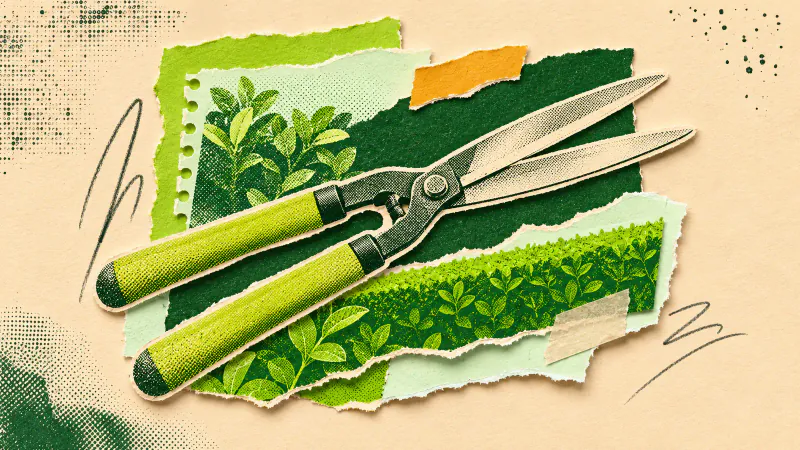
Garden hedge shears should suit the soft growth you intend to clip and the movement your arms can comfortably repeat. Choose the blade shape for the finish, then try the complete tool with both hands. A longer blade is little help if its weight makes you lose control near the end of a hedge.
Start with an existing small hedge that you can maintain from the ground. This is a buying decision, not a November trimming instruction. The plant species, local conditions and nesting wildlife determine when you can do the work.
Check whether shears suit the plant
Look closely at the growth you expect to remove. The RHS hedge-trimming guide identifies hand shears as suitable for small hedges and soft growth. They cut across a surface of young shoots. They are a different tool from the hand pruning shears used to select and cut individual stems.
Check the leaves as well as the branches. On large-leaved evergreens, broad clipping cuts through leaves and can leave an unattractive finish. Individual cuts with secateurs or suitable loppers give more control over which stems come out.
Write down the plant name before you shop. If the job is reducing thick old branches or reaching over a tall hedge, describe that job to a gardener first. A pair of hedge shears does not become a renovation tool because its handles are long.
Match the blades to the intended finish
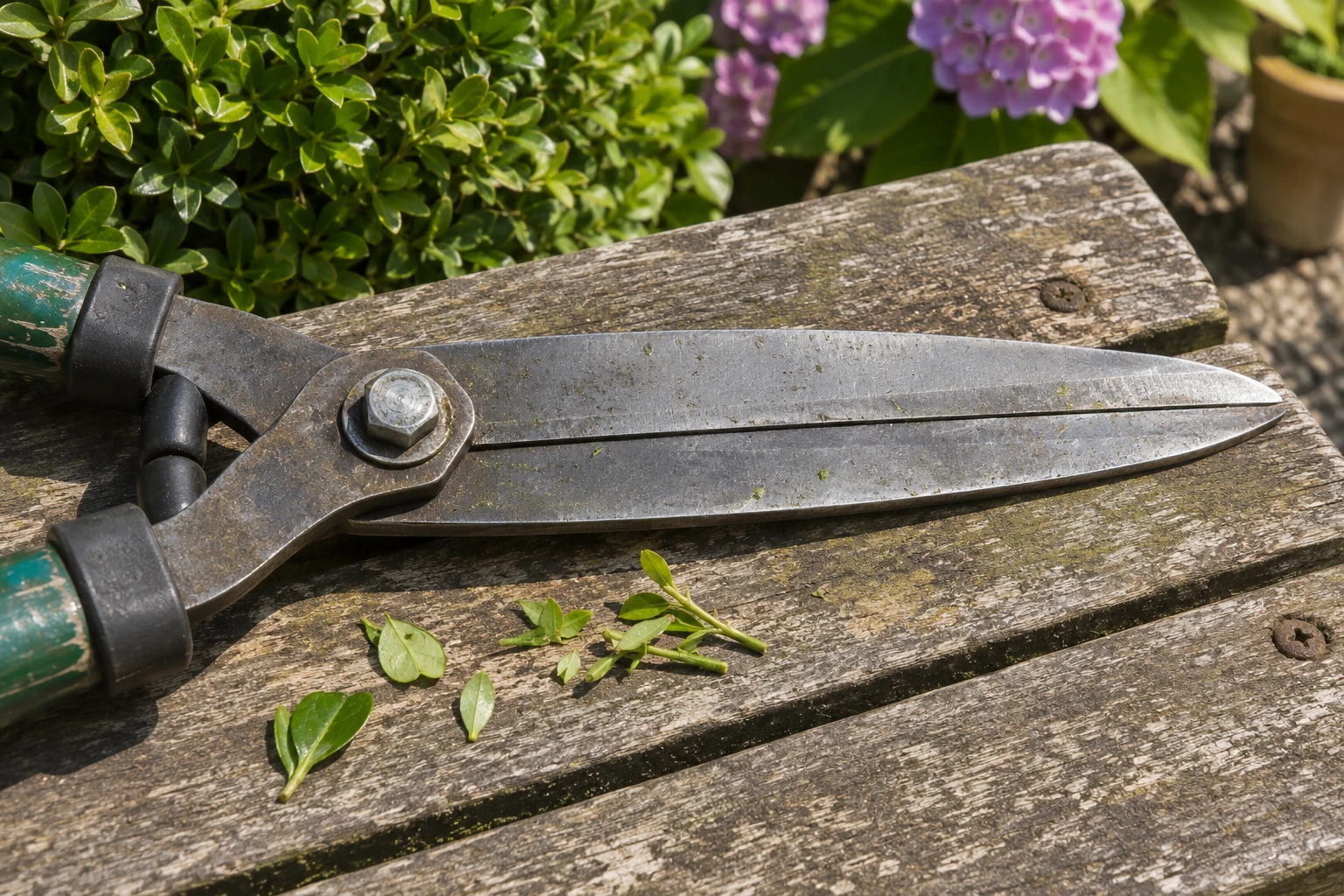
Compare the cutting edges, not just the tool's overall length. Short straight blades can be useful where you need to see a small curve or corner. Longer cutting edges cover more of a face at each closure, but they also need room to move beside neighbouring plants and fences.
GARDENA's manual clipper range distinguishes straight blades for precise shaping from waved blades intended for broader hedge cutting. The waved edge helps retain shoots during the cut. Check what the maker says about the exact model rather than assuming that every blade with the same outline behaves alike.
Ask to compare two tools side by side. Note the blade length, straight or waved edge, and access to the pivot. Keep fingers away from the edges while inspecting them. You need to be able to see the line you are cutting without leaning around the handles.
Try the opening movement with both hands
With the shop's permission, hold the tool as the instructions describe and open and close it slowly in a clear space. Check where your elbows go. A comfortable closed grip says little about the width your arms need when the blades open.
Repeat the movement a few times at a comfortable working height. Notice whether the handles slip, whether your wrists bend awkwardly and whether you start lifting your shoulders. Thrive's hedge-tool advice recommends looking for light shears with a comfortable grip. The useful comparison is how each complete tool feels in your hands.
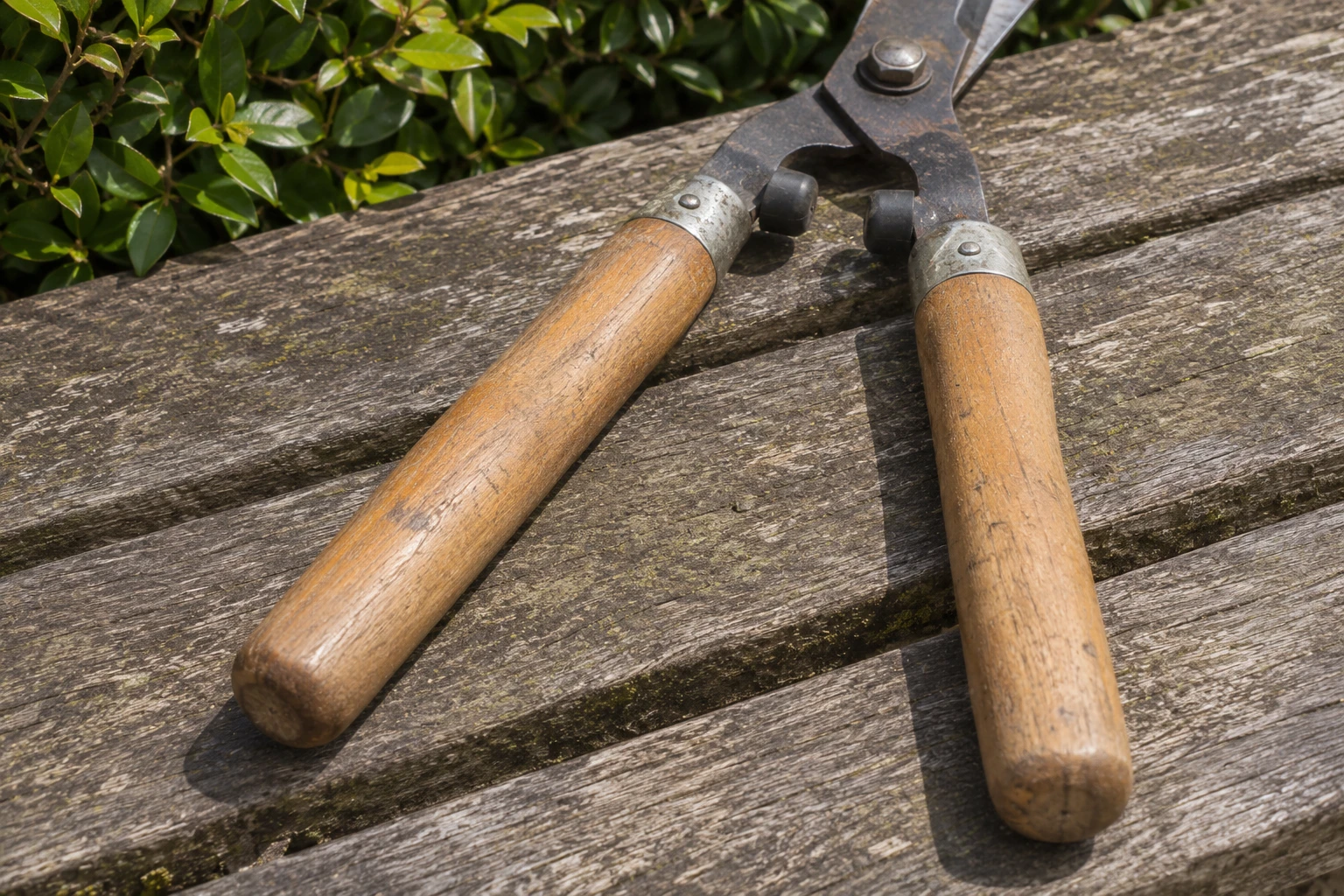
Inspect the handle stops or bumpers where fitted. Ask how they should meet and whether replacements are available. If you choose telescopic handles, try the approved extension positions too. Check that the locks hold as the manufacturer intends. Added reach changes the balance; it is not a reason to stretch beyond a stable position.
Check care and storage before buying
Find the instructions for the exact model. Check the recommended cleaning, lubrication and sharpening method, including any restrictions for coated or waved blades. Do not assume the method for a bypass pruner applies to these edges.
Look up replacement handles, stops and blade parts by model number. Availability matters more than a general promise that the brand sells spares. Check whether the supplied blade cover can be used for storage and choose a dry place where the closed tool will not fall or catch someone reaching for another item.
Keep a short comparison note with the plant, blade type and the model that felt easiest to control. If you are also changing the surrounding planting, Gardenly's styles can help you explore its appearance from a photo. A render cannot select cutting equipment or tell you when a hedge is ready to trim. Base that purchase on the plant and the tool you have actually held.
