


French country garden ideas work best once the route, seating place and storage already make sense. Build the style with a restrained family of pale, warm, weathered materials, loose flowering shapes and one object that earns its place. Keep the lavender colour small enough to read as an accent.
If "French garden" makes you picture strict symmetry, set that thought aside here. A French country garden can have a quiet frame without becoming formal. The point is to make a few rustic choices feel related, not to turn an ordinary backyard into a miniature estate.
Start with one useful anchor
Choose one object that already has a job: a bench where you pause, a pot beside the door or a low table near an established seat. Use it as the visual anchor, then remove the extra objects that merely repeat the same rustic message.
This step begins after the basic layout works. If you still need to solve the route to the door, bins or bicycles, use the country front garden guide first. This article does not redesign the entrance or choose the best seat. It gives an existing arrangement a more coherent material and planting language.
Look at the anchor from the place where you normally see it. The object does not need to sit in the middle. It needs enough clear ground around it to remain useful and enough repetition nearby to look intentional.
Keep the material family small
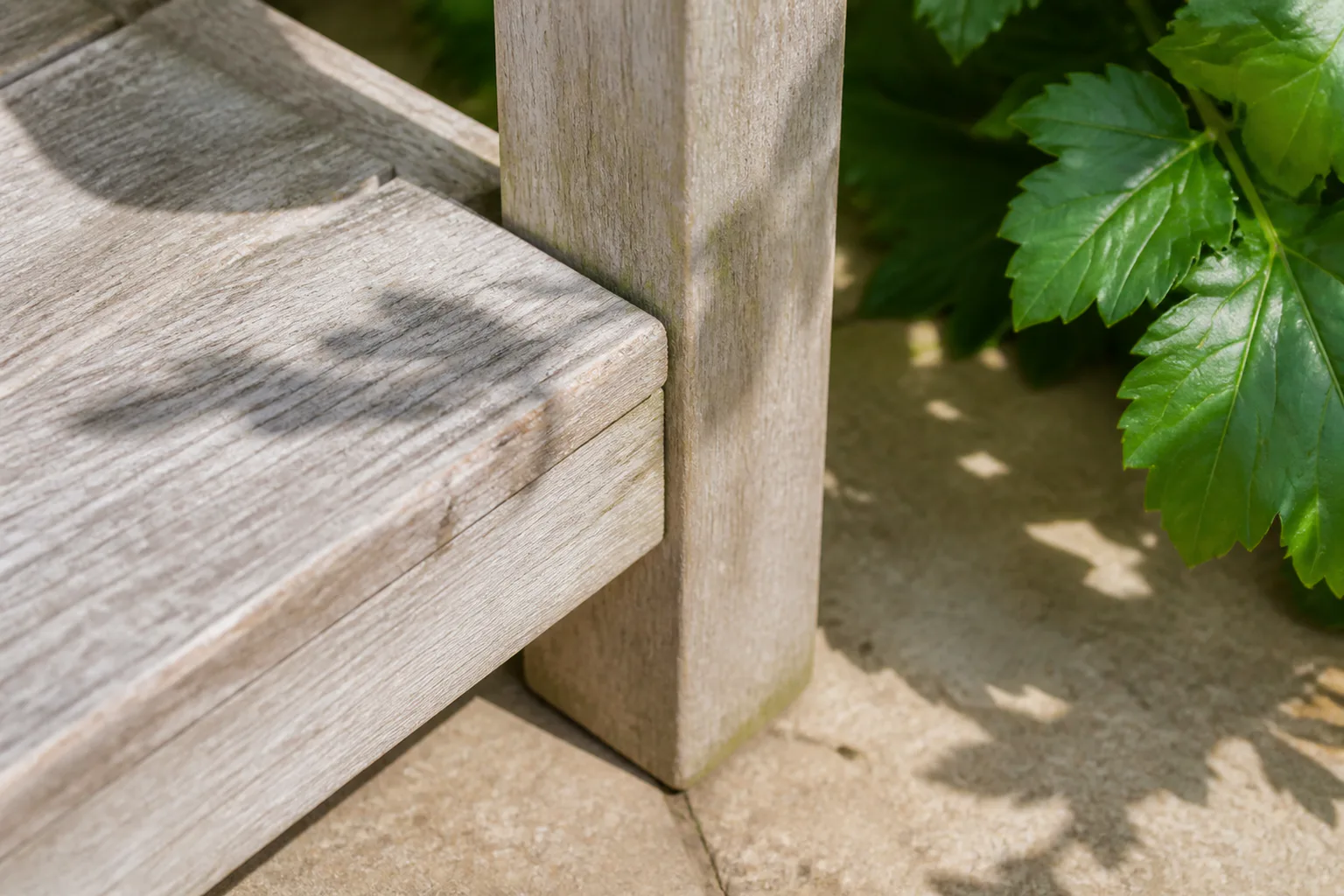
Start with the useful surfaces already in place. A pale gravel area, warm cream stone or washed timber can set the direction. Add one compatible finish rather than replacing a sound surface so every item looks equally old.
Put samples together before ordering a larger quantity. Compare them in dry and wet weather, and beside the house material that must stay. Pale does not mean identical. Small differences in warmth and texture keep the result from looking like a matching furniture set.
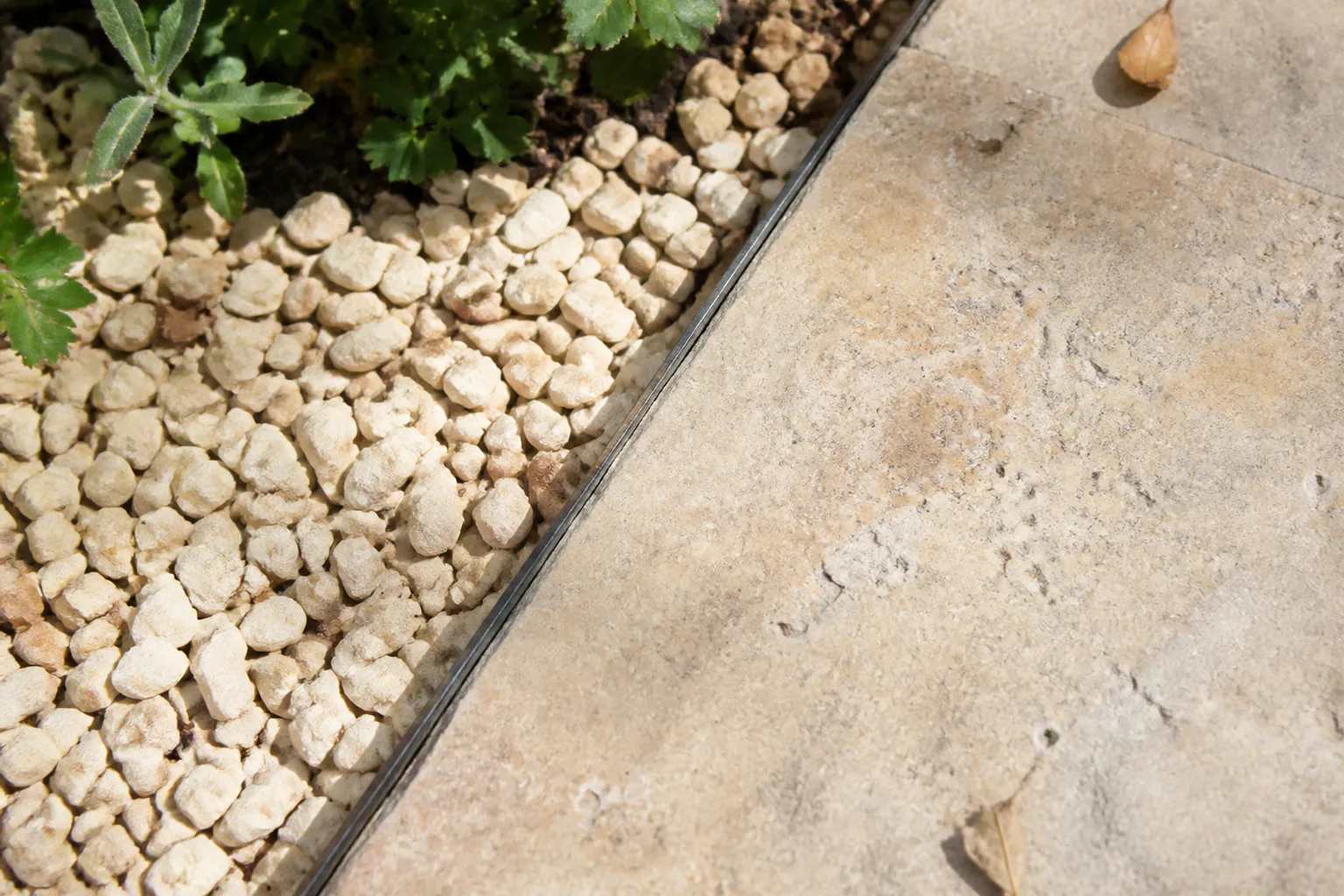
Pay particular attention to edges. Gravel meeting stone, timber touching paving and a pot standing on a firm surface are ordinary details, but they decide whether the composition feels settled. Keep those junctions legible and practical to maintain.
This is also where the style parts company with the published Mediterranean garden guide. French Country does not need terracotta warmth, useful shade or a planting response to a Mediterranean climate. Here, the material family stays lighter and quieter.
Use the lavender note once
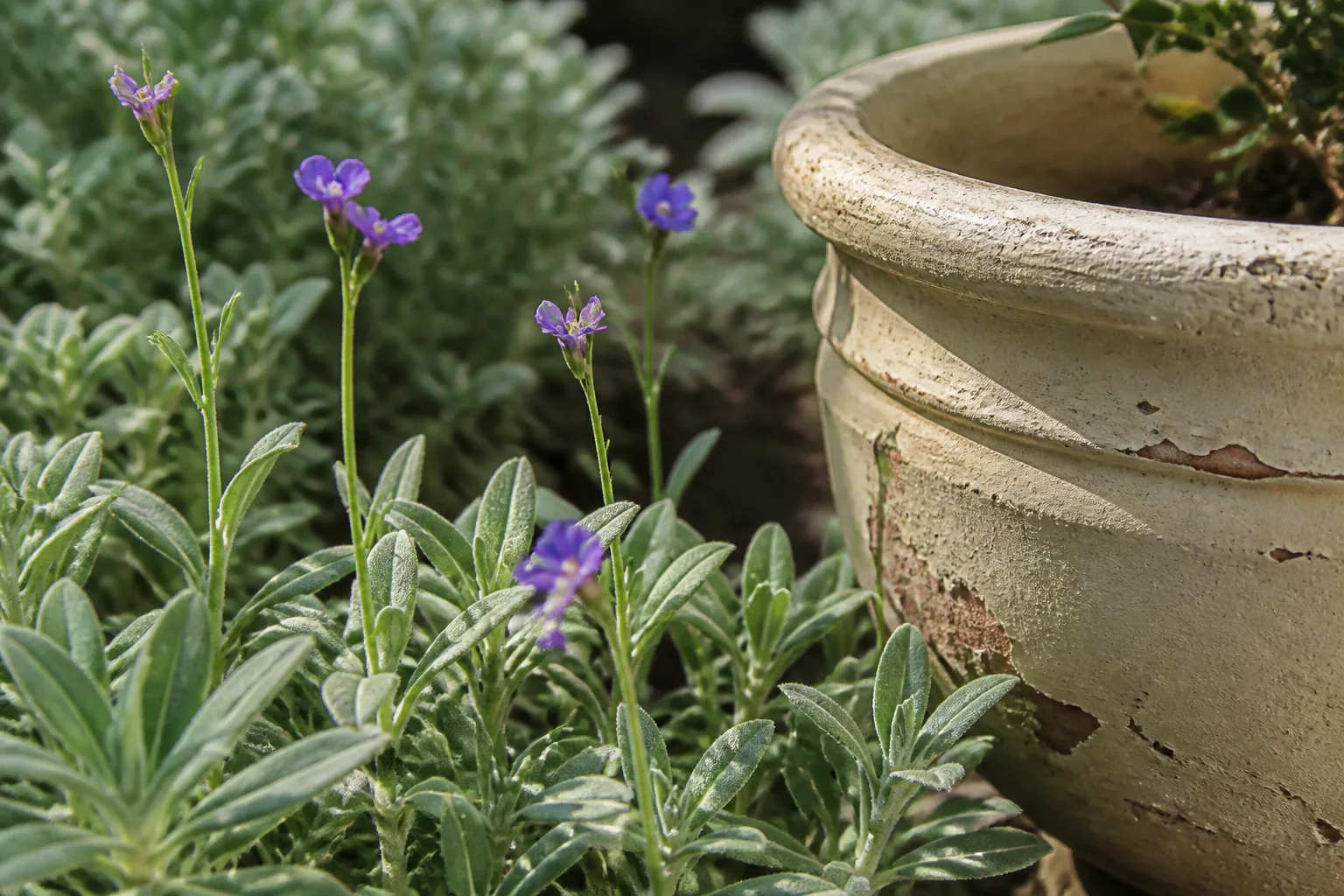
Gardenly lists French Country in its Cultural collection and describes it as "Rustic elegance with lavender touches." Treat the lavender touch as a colour cue, not a demand for one particular plant. A few violet flowering stems, a muted cushion or a small painted pot can carry it.
Build the surrounding planting from shapes first. Repeat a loose upright form, a softer mound and some quieter foliage so the violet accent has somewhere to sit. Leave open soil and access where plants still need to grow or be cared for.
Choose actual plants only after checking the garden's light, soil, climate, moisture and the space available at mature size. The image can help you judge colour and mass. It cannot tell you which species will thrive in your garden.
Stop before the objects multiply. The Cottagecore article allows a looser, more prop-led mood around a clear route. French Country works better here when one useful object, one restrained material family and one flower colour do most of the talking.
Preview the relationships on your own photo
Open the Gardenly style gallery, choose French Country and add one photo of the garden from a view you use often. The app asks the image model to redraw planting, beds, lawn, garden furniture and decorative elements in that style.
The model is instructed to keep the house, hardscape, camera position and lighting unchanged. That is an instruction, not a guarantee. Compare the result with the original and ignore any invented plant detail. Look instead at the balance between pale surfaces, loose planting, violet colour and the practical object you chose.
Write down the two or three relationships worth keeping. Then check materials, drainage, dimensions and plant choices on the real site, with a nursery, garden designer or landscaper where needed. The render is a picture for that conversation, not a planting plan or construction drawing.