

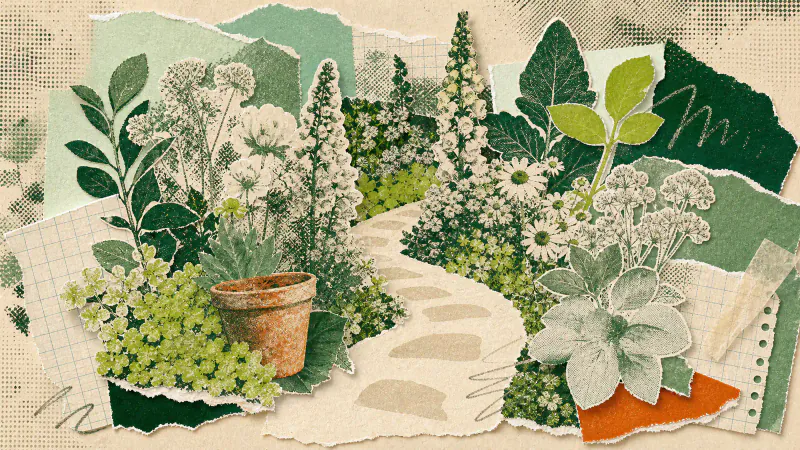
A cottagecore garden should feel generous and a little unruly, but it still needs a plan. Keep the routes and useful areas clear, then soften their edges with layered planting, muted flower colours and materials that look better after a few seasons outdoors.
The quickest way to lose that feeling is to buy a collection of rustic props before deciding how the garden works. Settle the path, the seat and the planted areas first. Add the softer details once those parts make sense.
Keep the route obvious and soften its edges
Begin with the walk from the door to the gate, shed or main seat. That route needs enough room for a watering can, a bag of compost or the bin you forgot to put out. Cottagecore does not require daily battles with wet leaves brushing both shoulders.
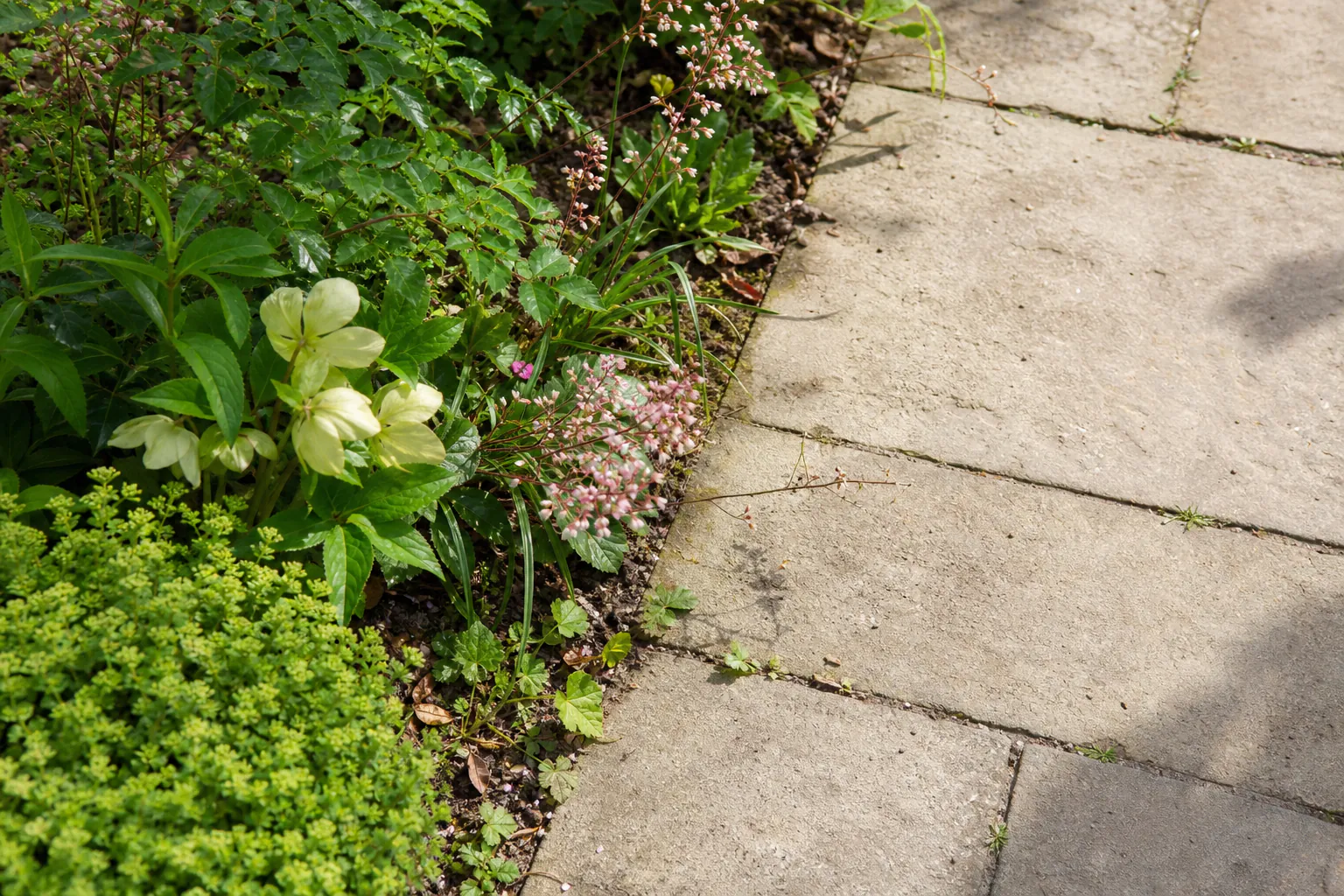
Once the route is settled, make it feel less rigid at the edges. Let low planting lean slightly over paving, allow a few plants to repeat on both sides and avoid lining everything up at the same distance. The path can remain straight if that is what the plot needs. Planting does more to loosen the mood than an impractical curve.
If the garden already has sound paving, keep it. A narrow band of gravel, old-looking pots or one weathered timber edge can change its character without replacing a useful surface. Choose materials that relate to what is already there instead of adding a different rustic finish to every corner.
Build planting in layers, not as a shopping list
The Gardenly catalogue describes Cottagecore as "Whimsical florals and muted colors." In a real garden, that reads best as a mix of heights and leaf shapes rather than a row of unrelated flowering plants.
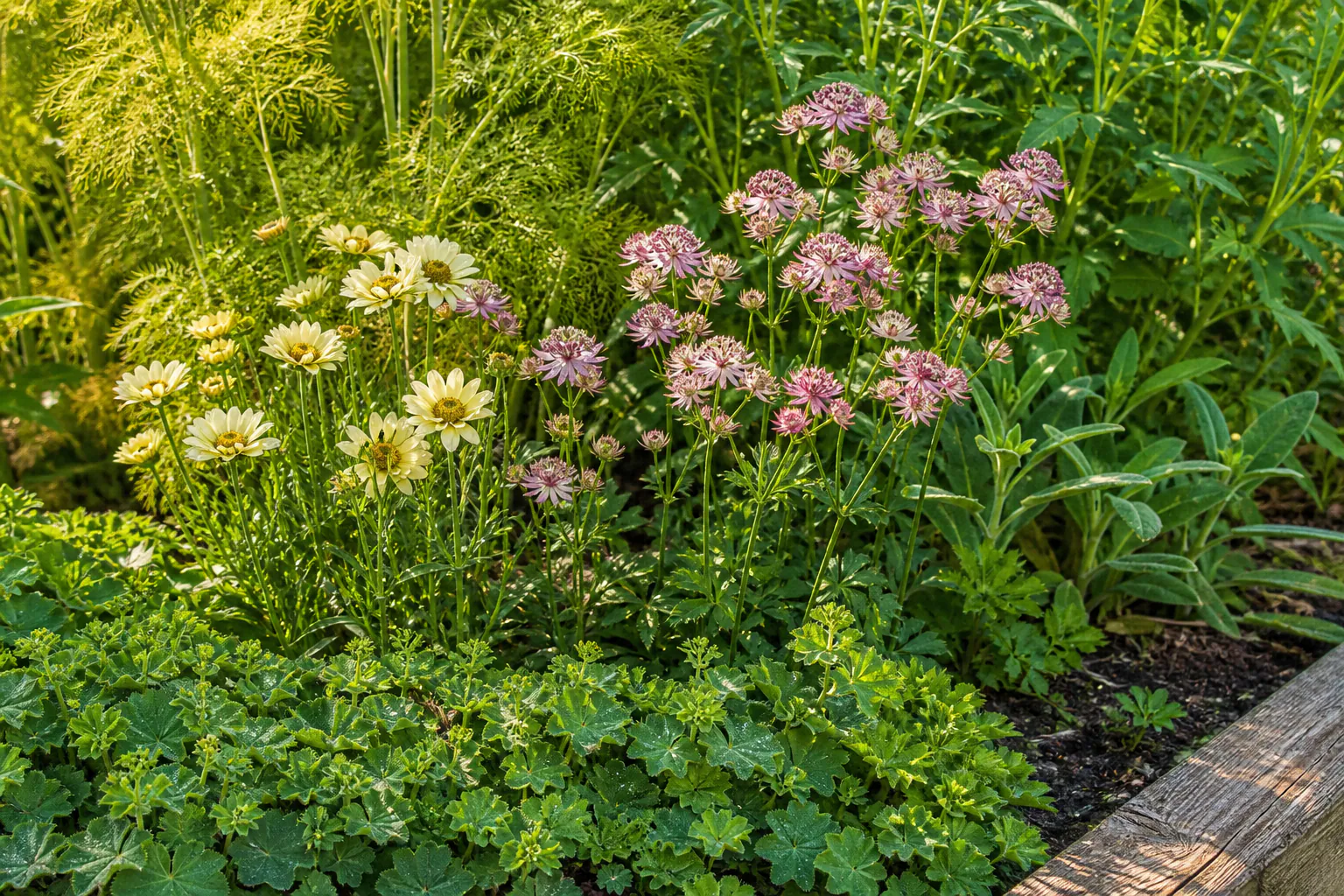
Start with the plants that give the bed its outline and stay visible for the longest part of your season. Add medium-height plants in loose groups, then use lower plants to cover some of the bare ground at the front. Repeat a few choices elsewhere so the abundance looks connected rather than accidental.
Flower colour can stay soft without becoming beige. Pick a small family of colours and let foliage do some of the work between flowering periods. Check every plant against your soil, light, climate and appetite for maintenance. A picture can suggest the shape of a border, but it cannot tell you what survives a winter in your garden.
Let useful things belong in the picture
Cottage gardens feel convincing when practical objects are part of the scene. A bench can sit where you actually pause. Herbs can grow near the kitchen door. A water butt, tool store or compost area can remain useful while planting screens its hardest edges.
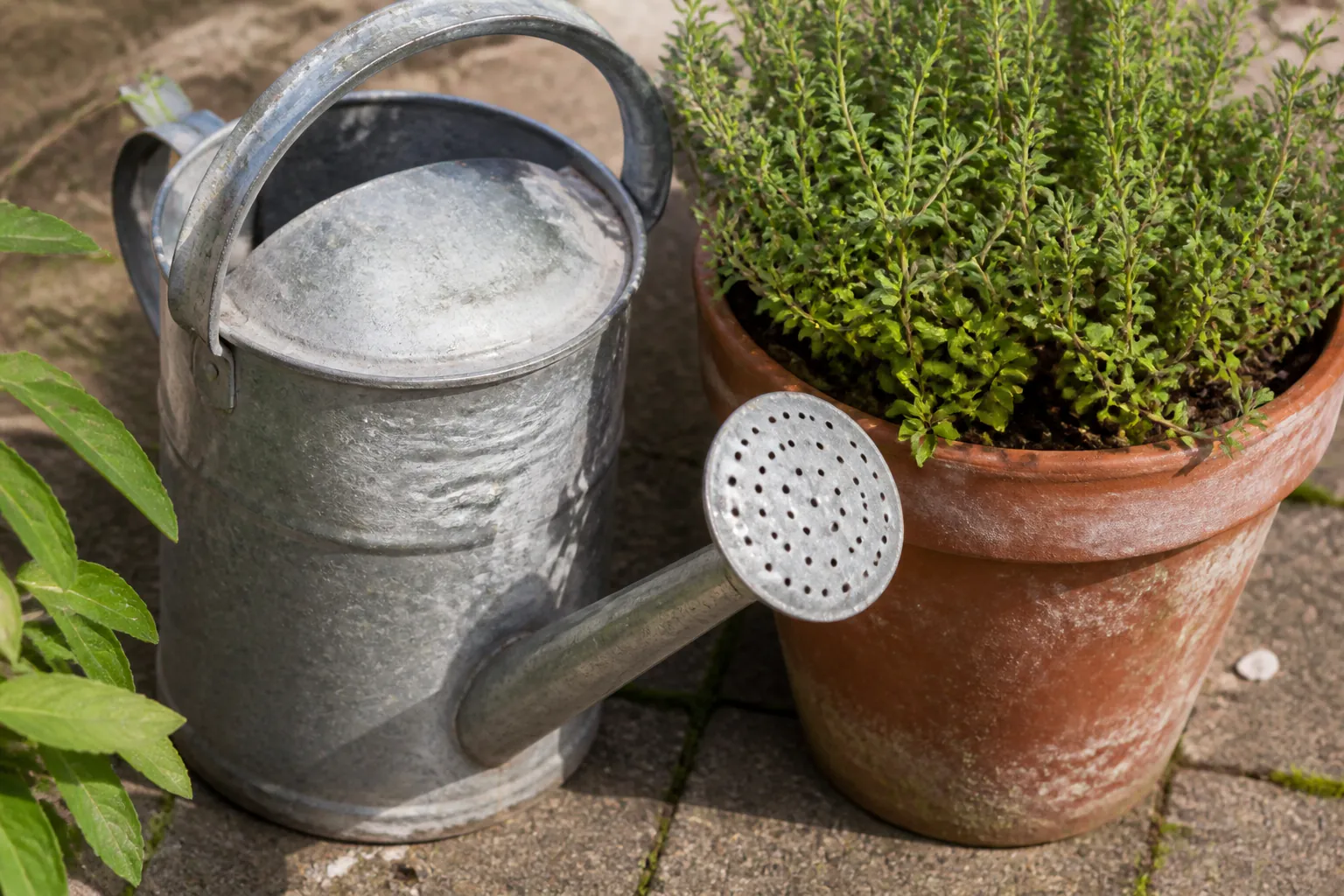
Do not hide every sign of work. One watering can beside a pot looks plausible; six decorative watering cans look like a shop display. The same goes for crates, baskets, lanterns and vintage signs. Choose an object because it has a job or because you genuinely like it, then leave some room around it.
Weathering helps, but fake age is easy to overdo. Timber, terracotta and galvanised metal will develop their own marks outdoors. It is usually better to repeat one or two materials than to assemble a full set of things labelled "rustic."
Keep one quiet area
Leave the main seat, a short stretch of path or one patch of ground visually calm. That pause makes the fuller borders feel intentional and gives you somewhere to put a cup without moving three pots first.
This is the useful contrast with a Zen-inspired backyard. Zen relies on restraint across most of the plan. Cottagecore can carry more colour and overlap, but the route and focal areas still need editing. A garden can feel abundant without every surface becoming occupied.
Preview the balance on your own garden
Gardenly includes a Cottagecore style in its Nature collection. Apply it to a photo taken from the view you use most often, then look past the invented plant details. Ask whether the render has the right balance of open path, layered border, seating and softer materials.
The app asks the image model to redraw planting, beds, lawn, garden furniture and decorative elements while keeping the house, hardscape, camera angle and lighting in place. That is an instruction, not a guarantee. Compare the result with your original photo and treat it as a visual brief, not a planting plan or construction drawing.
Pull out a few decisions you can discuss with a nursery or landscaper: which route stays clear, where the tallest planting belongs, how much colour the space can carry and which existing materials remain. You can compare Cottagecore with the other directions in the Gardenly style gallery. Keep the version that makes daily use easier as well as prettier.