
Choose a bulb planter tool by comparing its hollow cutting tube with your bulbs and their planting instructions. Then check how you will push it into the ground and release the soil. Check the width, usable depth and working position against the job in your garden.
Start with the bulbs already on your list. Keep the packet, measure the widest bulb and note the required planting depth. This guide compares ordinary manual planters for individual holes. Our spring-bulb planting guide covers the separate decisions about planting time, growing conditions and care after flowering.
Check the tube against the bulb
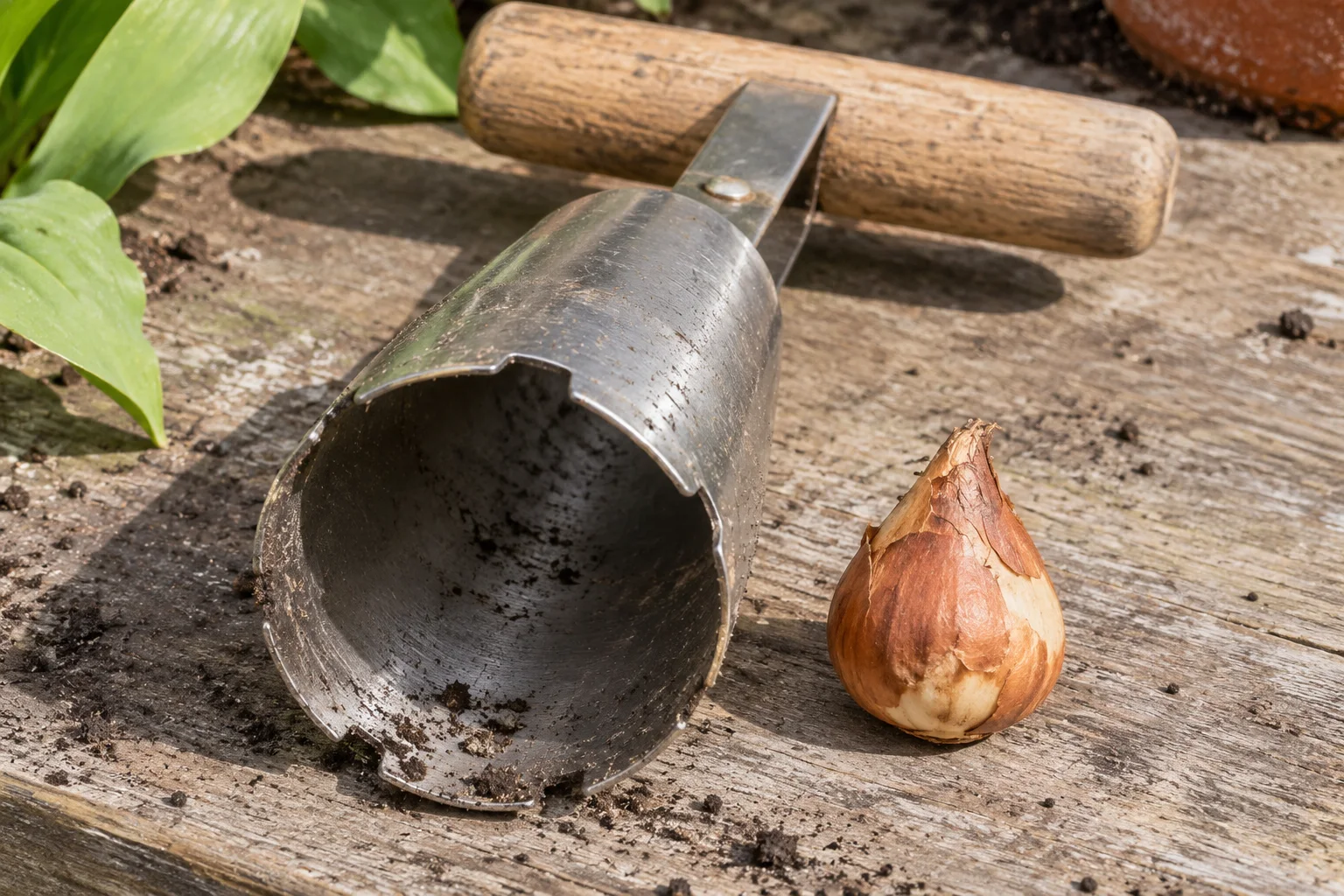
Look for the inside diameter of the cutting tube. The bulb must fit into the finished hole without being squeezed. Compare the largest bulb in your batch with the opening, and ask the seller for the measurement if the listing gives only the tool's overall width.
Check usable depth separately. For example, Burgon & Ball's long-handled planter removes a core 6 cm across and has a maximum depth of 16.5 cm. Those figures describe that model. They do not set the planting depth for every bulb that fits inside it.
Read the bulb supplier's depth instructions first. The RHS planting guide gives a general depth of two to three times the bulb's height for many bulbs, with the base resting at the bottom of the hole. Specific bulb instructions can differ. Check that the tool reaches the depth your bulbs need before you buy it.
Compare a hand grip with a long handle
A short planter keeps the grip close to the hole. Try it in the working position you expect to use, with your usual gardening gloves. Check whether you can hold the handle and operate any release control without changing to an awkward grip.
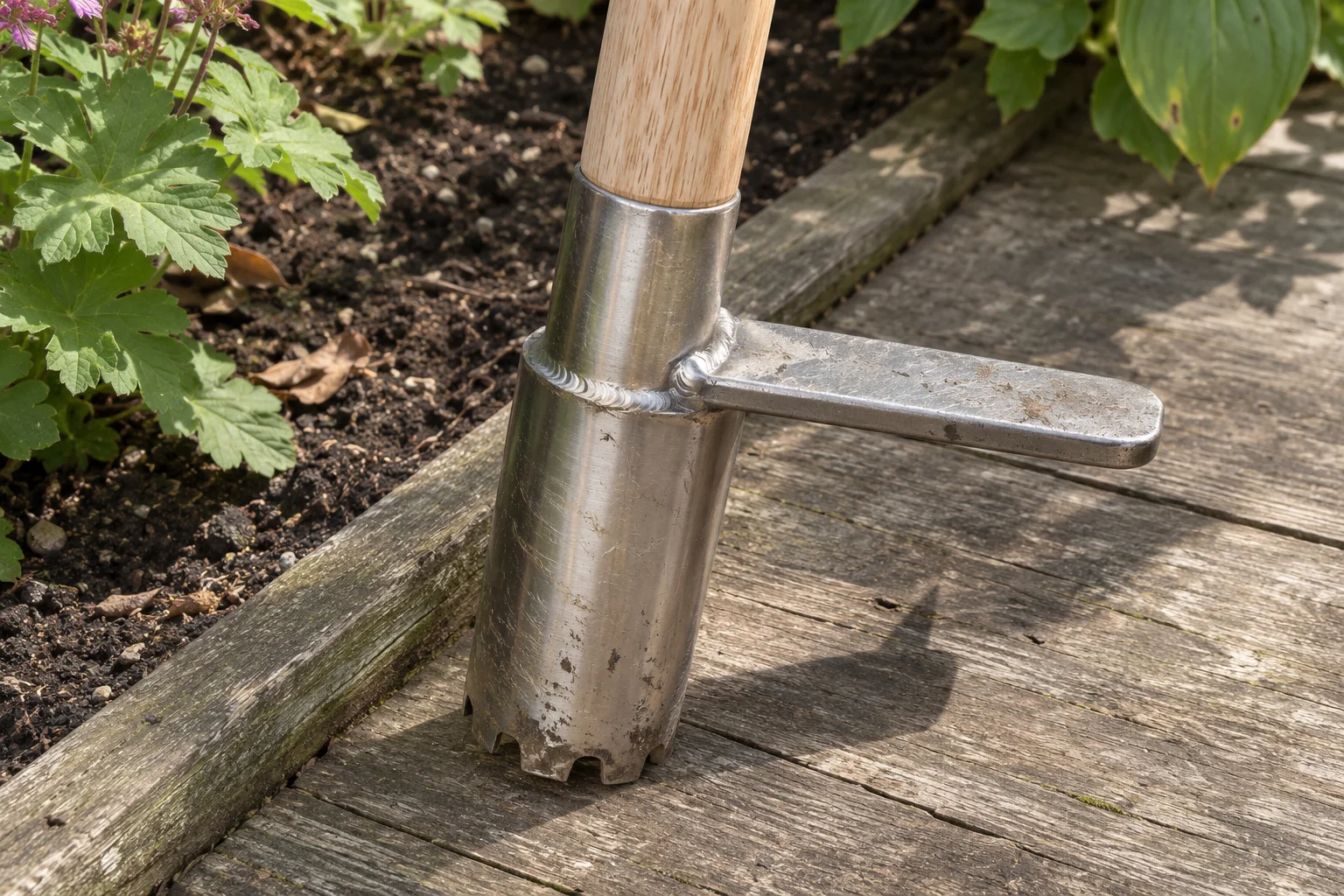
A long planter lets you make holes while standing. Compare the complete tool's length with your height, and check the space needed for your hands to turn it. Look at the footbar and ask whether your usual garden footwear sits securely on it. A wide handle may need more clearance beside an established shrub than the cutting tube does.
Thrive's tool-buying advice recommends trying weight, grip and balance, and checking long handles against your posture. Hold the actual model if possible. An online description cannot show how its handle feels in your hand.
Find out how the soil comes out
Release methods vary. The GARDENA hand bulb planter has a handle control that opens the planter to discharge soil. With the Burgon & Ball long model, making the next hole pushes the previous soil core out of its tube.
Ask the seller to show the complete cycle. You need to understand where the soil goes, how you retrieve it and how you clear the last core when the job is finished. Follow that model's instructions. Keep fingers away from the cutting rim when checking the mechanism.
Consider your actual ground as well. Describe it to the seller, including stones, dense roots or sticky soil. Ask whether the model suits those conditions and whether a trial or return is possible. Avoid treating a sharp rim or footbar as a promise that the planter will pass through every obstruction. Stop when a buried stone or root prevents normal movement.
Decide whether a tube suits this job
Count the holes you intend to make and look at their spacing. A tube is a specific tool for removing individual soil cores. For a group that needs one wider planting hole, your existing hand trowel may already do the work. Settle the planting arrangement before buying equipment for it.
Before ordering, check the exact model's cleaning and storage instructions. Look inside the tube and around its joints for places that will need attention after use. Ask about replacement parts if it has a moving release mechanism.
Take the bulb packet and your measurements to the shop. Try the grip, check tube clearance and depth, and ask for a release demonstration. If you are also comparing the appearance of the surrounding border, Gardenly's styles can help explore planting ideas from a photo. Keep bulb sizes, hole depths and tool fit in your measured notes.
