

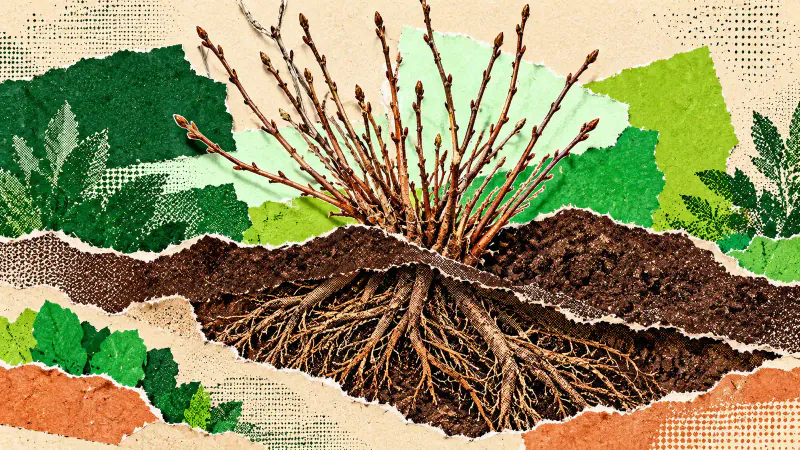
Heeling in plants means putting their roots into soil temporarily while their permanent position is unavailable. For dormant bare-root deciduous trees and shrubs, a small trench can keep exposed roots covered until you can plant properly. Choose ground that drains, work soil between the roots and keep checking its moisture.
This guide starts with a delivery of identified, dormant woody plants with bare roots. It covers the holding stage only. The RHS planting guide recommends planting these promptly, with heeling in as a temporary option when that is impossible. Check your supplier's instructions for the particular plants, especially if growth has already started.
Check the delivery before choosing a holding spot
Open the delivery promptly and match the plants to the order. Keep their identity labels attached. Check the packing around the roots and look for damage that needs discussing with the nursery. Photograph a problem before changing anything; a dry-looking plant is not a reason to invent a rescue treatment.
Keep exposed roots away from drying sun and wind while you prepare. UC Marin Master Gardeners identifies those conditions as drying risks and describes covering roots with moist material when planting must wait. Have the temporary bed ready before carrying the plants out. Unpack only the amount you can deal with promptly, keeping the others protected according to the supplier's directions.
Do not put the parcel in a heated room to wake it up. If you are unsure whether a plant is still dormant, send the nursery a photograph and ask about suitable short-term care. The advice for a leafy arrival can differ from the advice for dormant bare-root stock.
Find workable soil with room for all the roots
Use a spare patch of well-drained soil you can reach again easily. Avoid a hollow that collects rain. The permanent bed may be too wet to plant, but that does not make a similarly wet corner suitable for temporary storage. The RHS advises against planting in frozen or waterlogged ground.
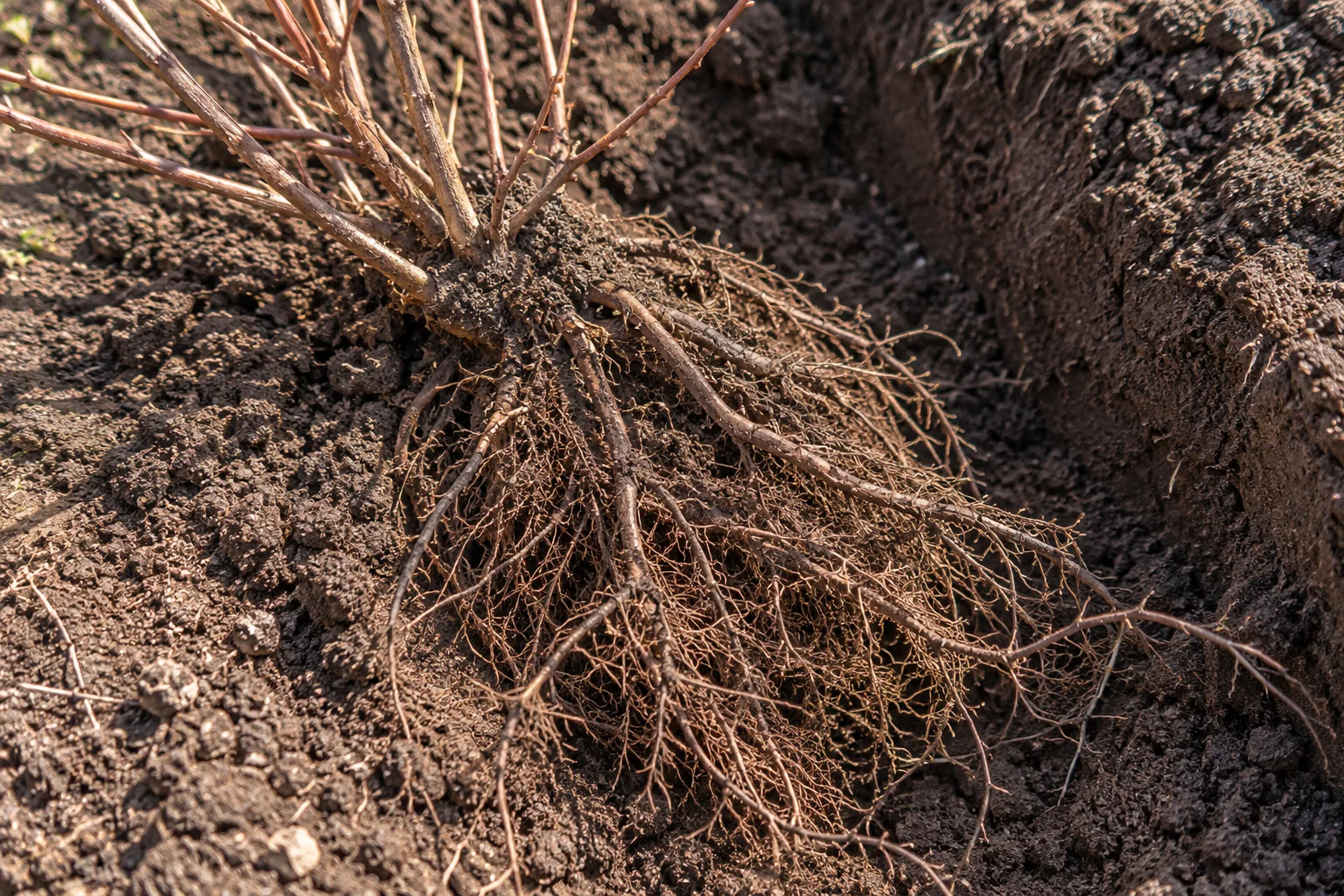
Dig a shallow trench or hole broad enough to take the roots without forcing them into a tight knot. Its size follows the actual root systems. Put the excavated soil beside it and break up large clods so you can return it around the fine roots.
If every available patch is frozen, ask the supplier about holding the plants in their packaging in a cold, frost-free place. Chew Valley Trees describes this as a short-term fallback. Its guidance also offers a large pot with soil or compost as another holding option. Neither is permission to forget the plants until spring.
Cover the roots and settle the soil
Remove the root packaging before placing plants in the trench. Keep the stems above ground. Plants can lean at an angle if that makes covering the roots easier, provided they are supported and remain easy to lift later.
Return the loose soil gradually, working it between the roots. A gentle movement of the plant helps soil settle into gaps, as Chew Valley's guide explains. Check the middle of a group as well as the outside. Soil piled around a bundle can conceal exposed roots within it.
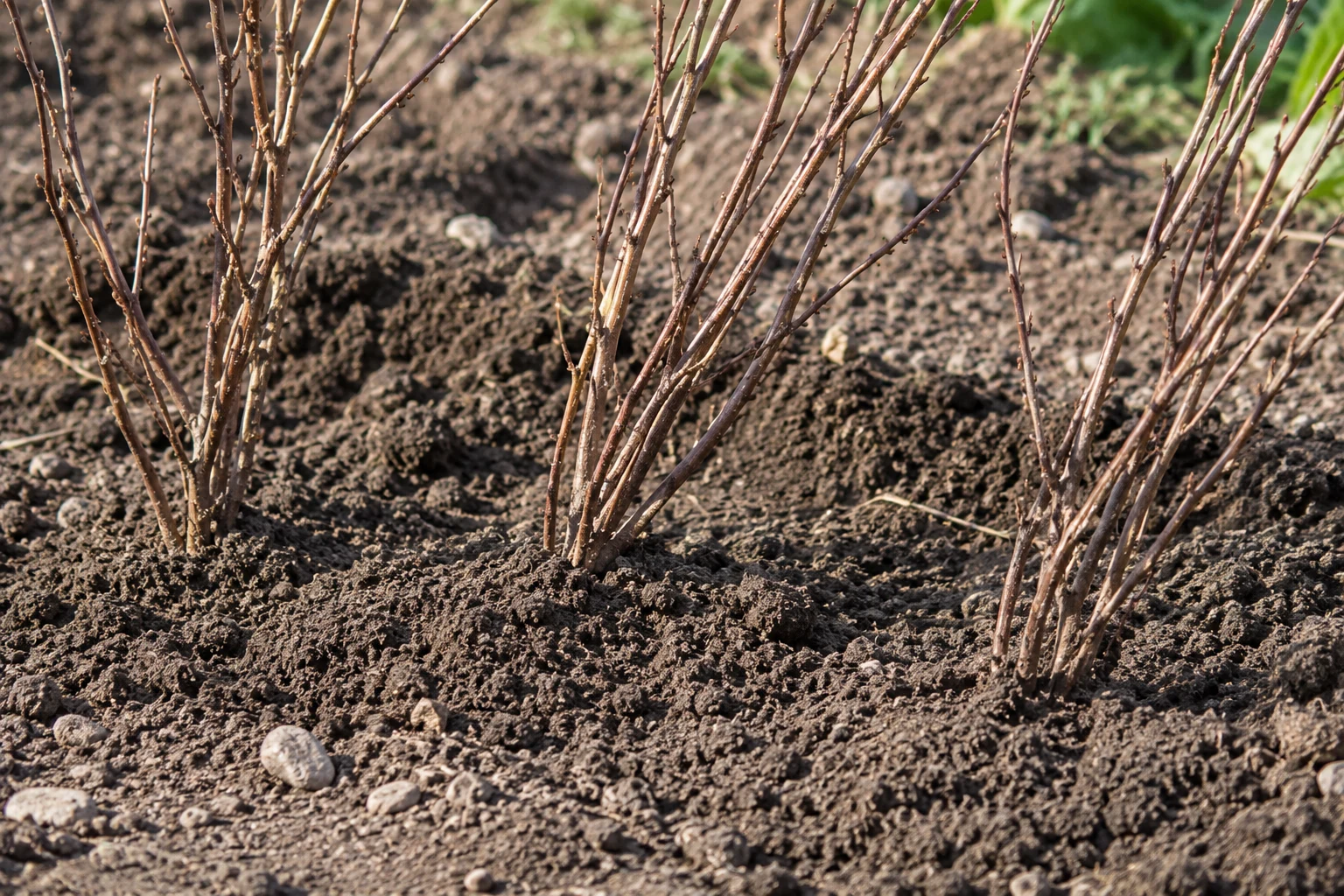
Keep the covering moist, with no standing water. Recheck after watering settles the soil and cover any roots that have become exposed. Use the nursery's advice if the root systems are bundled too tightly to inspect or cover properly. Keep labels readable and record where each group is held.
Check the holding patch and plant when possible
Inspect the soil during the delay, particularly after drying wind or heavy rain. Feel beneath the surface near the roots. Add water when needed, and reassess a spot where water collects. If rabbits browse your garden, use suitable protection around the temporary plants too.
There is no single storage allowance for every species and climate. Hopes Grove Nurseries gives different cautions for evergreen stock, which is outside this guide's deciduous scope. Arrange the permanent planting as soon as soil conditions and species guidance allow, while the plants remain dormant.
Lift carefully so you keep the roots intact, and follow bare-root planting instructions for that species. Our container-shrub planting guide describes a different starting material. Keep that distinction when choosing the next set of instructions.
For the future border's appearance, Gardenly can help explore a visual direction from a garden photograph. Use the plant labels and nursery advice for root care and planting timing; a generated picture cannot assess either.
