

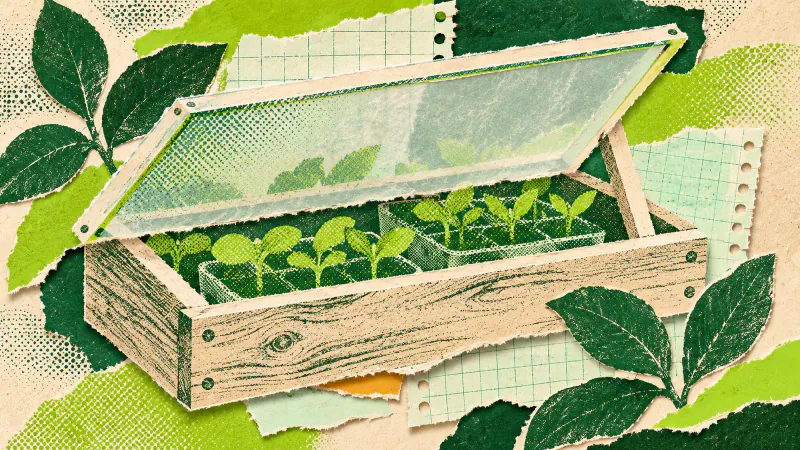
Choose a garden cold frame by measuring the trays you want to shelter, including the height of the plants. Find a sunny, sheltered spot with room to lift the lid and carry the trays out. Look for a lid you can secure at more than one opening, and work out who will check it on bright days.
A cold frame is a low, unheated box with a clear cover. Sunlight warms the space inside during the day. It can give indoor-raised plants a sheltered place to get used to outdoor conditions, a process called hardening off. The University of Minnesota's cold-frame guide describes how a snug lid holds warmth and a hinged lid lets you release it.
Measure the space under the closed lid
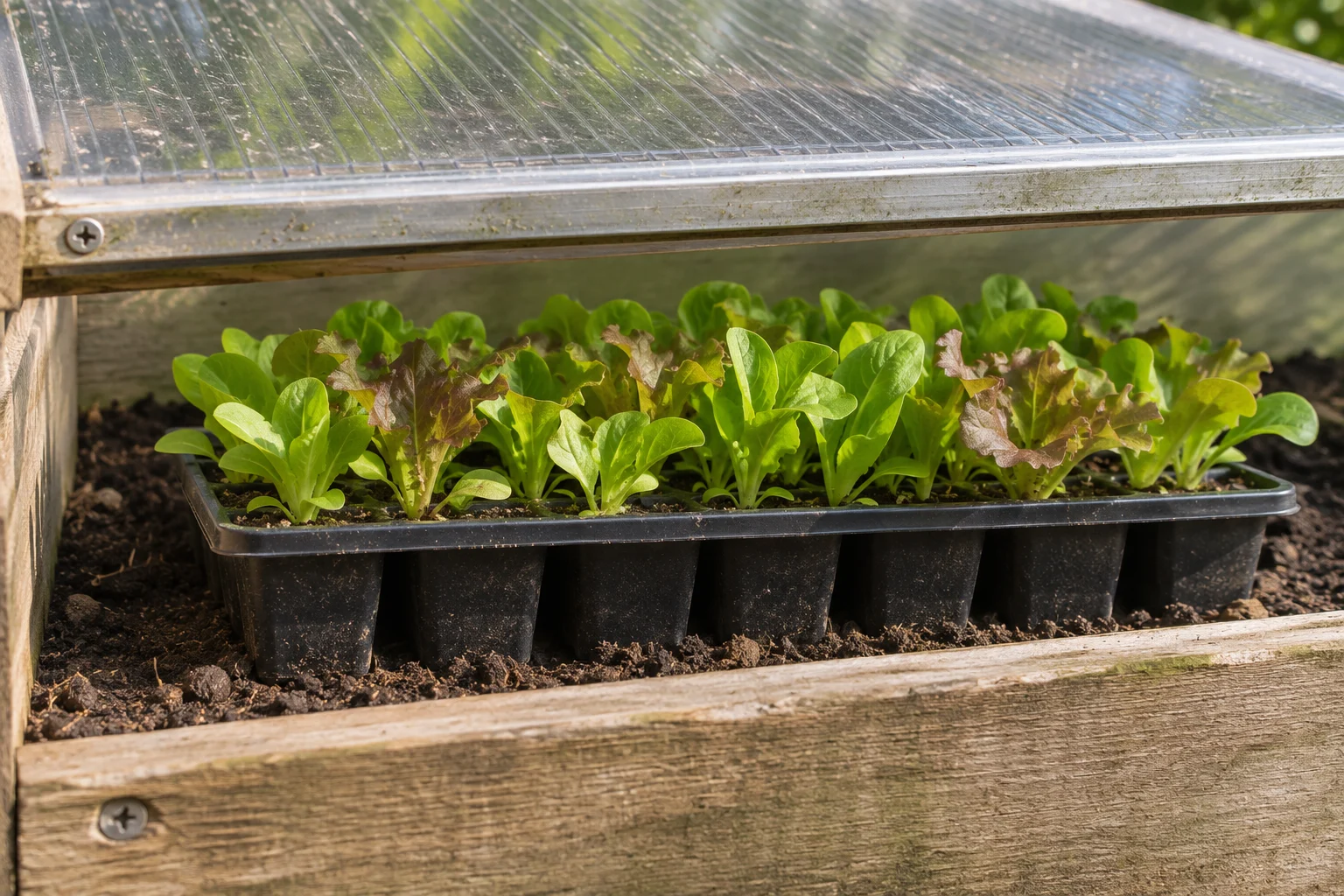
Put the trays you use side by side on a bench. Measure across them with their rims in place. Then measure from the tray base to the expected height of the leaves when the plants are ready to go into the garden. If you plan to raise the trays on a rack, include the rack in that height.
Check the model drawing for the inside width and depth. A sloping lid can leave ample room near the hinge and very little at the front. Take your height measurement to the lowest point where you want to keep a tray. Check across the full tray, especially if it is deep enough to span the slope.
Look at the opening too. A center bar can prevent a wide tray from lifting out even when it fits inside the box. Leave room for your fingers on either end of the tray. Try picking it up level before you decide how close together the trays can go.
Try the lid at a small opening
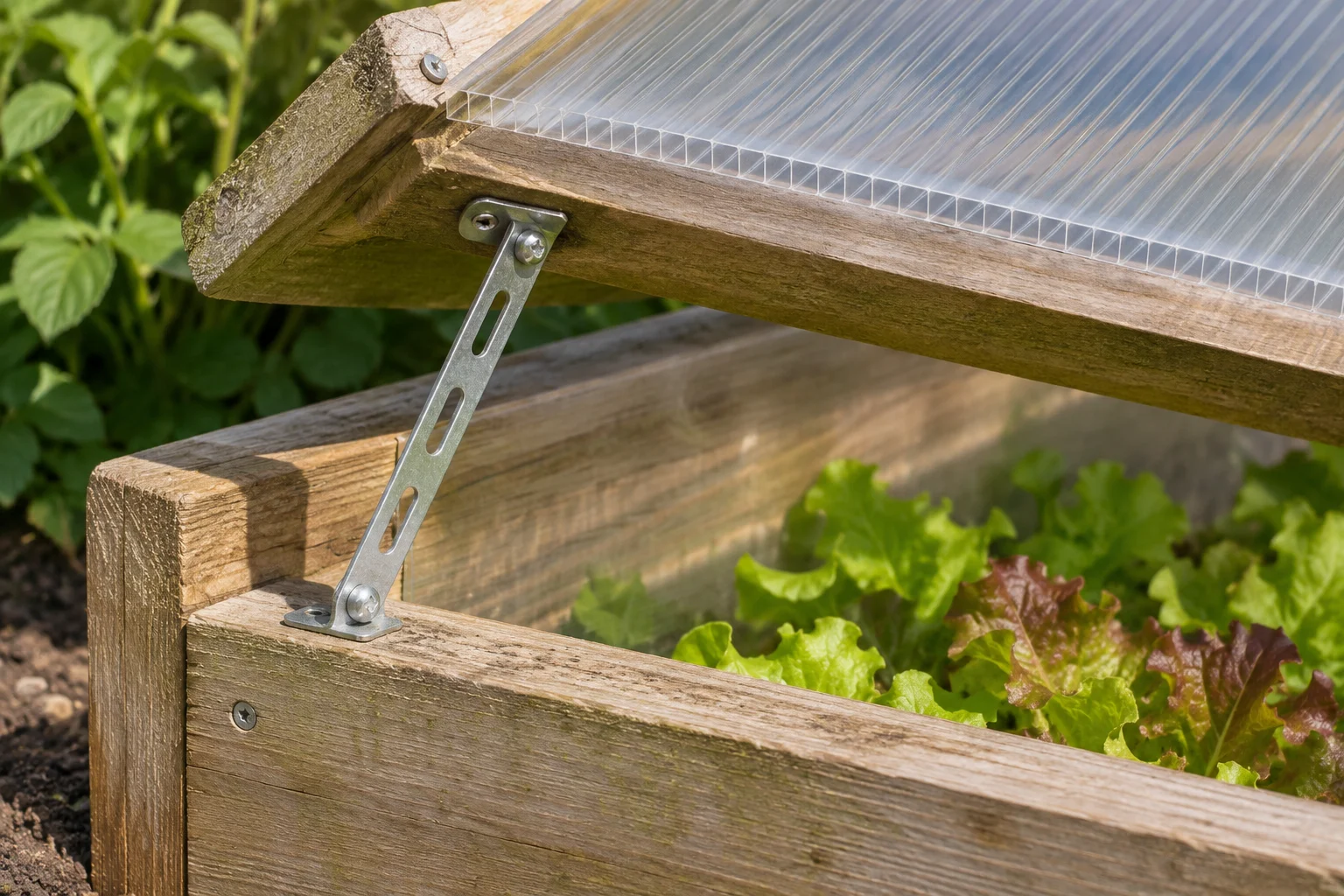
The Royal Horticultural Society's guide to cold frames recommends a sturdy lid that is easy to open and can let in different amounts of air. Test whether you can hold it at a small gap and open it farther for watering. On a split lid, check whether you can open one side without disturbing the other.
Try the latch from the place where you will stand. Make sure the support engages and releases without reaching past the moving lid. Ask which parts hold the lid open and which hold it shut. If a listing shows the lid wide open and gives no details about the support, ask for the assembly instructions.
Check sun, wind and reach at the site
Watch where the fence shadow falls in the months you plan to use the frame. A strip that is sunny in July may sit in shade during seedling season. Measure room for the open lid and check that you can kneel beside the frame and lift a full tray clear of the edge.
Check the supplier's instructions for the base and anchors on your surface. Lightweight frames need securing in exposed spots. If your growing plans include tall plants or space to work inside, see our guide to choosing a small greenhouse.
Make a plan for both sunny days and cold nights
Put a thermometer at tray height. Choose one that records the lowest and highest readings, as suggested by NC State Extension. Check it over a few empty days before relying on the frame. Strong sun can heat the box while the air outside still feels cool. Arrange for someone to check the lid when you are away, or plan to move the trays to a suitable spot.
Open the lid in stages as seedlings get used to outdoor conditions. Hardening off prepares young plants for that change. Frost-sensitive plants still need suitable shelter on cold nights. Keep a place to bring them back indoors, and use the frost protection guide to plan around the local forecast.
Once you have settled the working space around the frame, you can compare how nearby planting might look on a garden photo with Gardenly. Keep the actual lid swing and tray measurements on your site sketch.
