

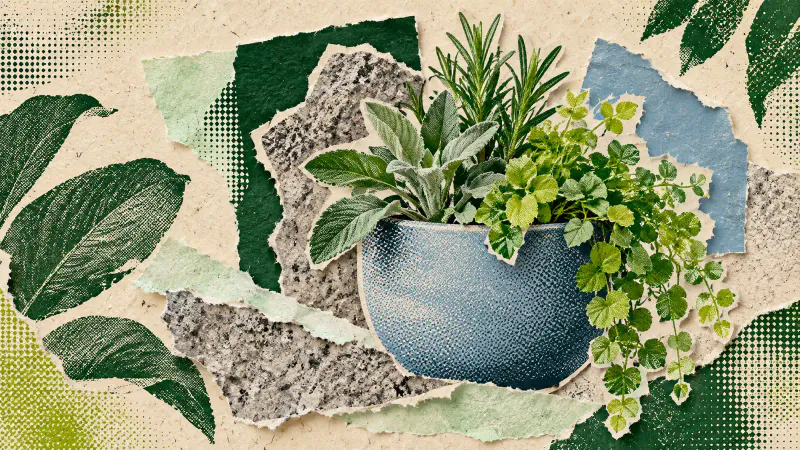
Use coastal garden ideas to bring a cool, quiet colour scheme into an ordinary inland garden: let existing grey paving form the background, add a muted blue object and keep green foliage prominent. A simple pot with a worn mineral surface can suggest the mood without a collection of seaside ornaments.
Gardenly describes its Coastal style as "Seaside serenity with ocean hues." Here, that is a starting point for choosing colours and finishes. A garden exposed to salt and strong coastal winds needs advice for those growing conditions; this guide concentrates on the visual choices you can try wherever you live.
Work with the grey already in the garden
Look at the paving, walls and pots before bringing anything home. An old concrete slab may already have the pale grey you want. Keep it in the colour scheme, including its speckles and slight variation, rather than imagining a perfectly white terrace that requires replacing sound materials.
Choose one small blue object to hold beside that background. Try a greyish blue if a bright turquoise feels too sharp. The useful question is whether the blue and grey sit comfortably together when you can also see the plants. Hold the sample where the pot will stand; you need to see the colours together.
Keep the strongest existing colour in the comparison. A red brick wall remains part of the garden even when it is outside your reference photograph. A small area of cool blue may be enough beside it. Avoid trying to cover every warm surface to make the scene match an imagined beach house.
Let the surface carry some of the interest
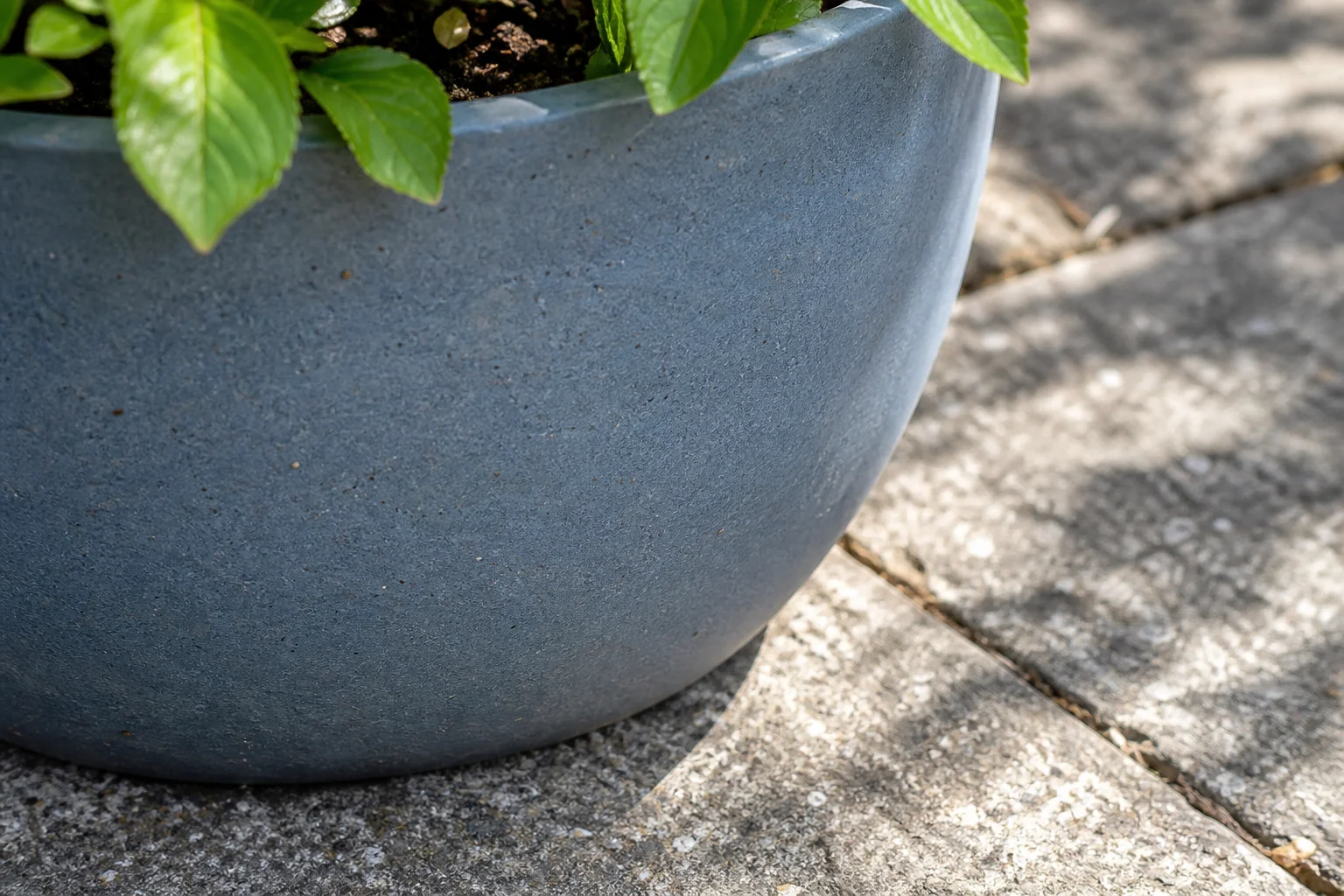
A matte pot beside speckled paving gives you two textures within a narrow colour range. Look for differences you can see close up: fine ceramic grain against a coarser stone surface, or a smooth curve beside a worn slab. You can keep the colours restrained while the materials still have character.
Start with the finish of something you own. Put a plain grey or blue pot on the paving and look at its side in daylight. If a glossy finish draws more attention than you want, try a matte sample beside it before replacing the pot. Keep the glossy pot if you prefer how it looks.
Read the supplier's outdoor-use and care information before buying. A stone-like finish describes appearance; it does not tell you what the object is made from or how to look after it. Choose an actual material with requirements you can manage.
Give one simple object room to show its shape
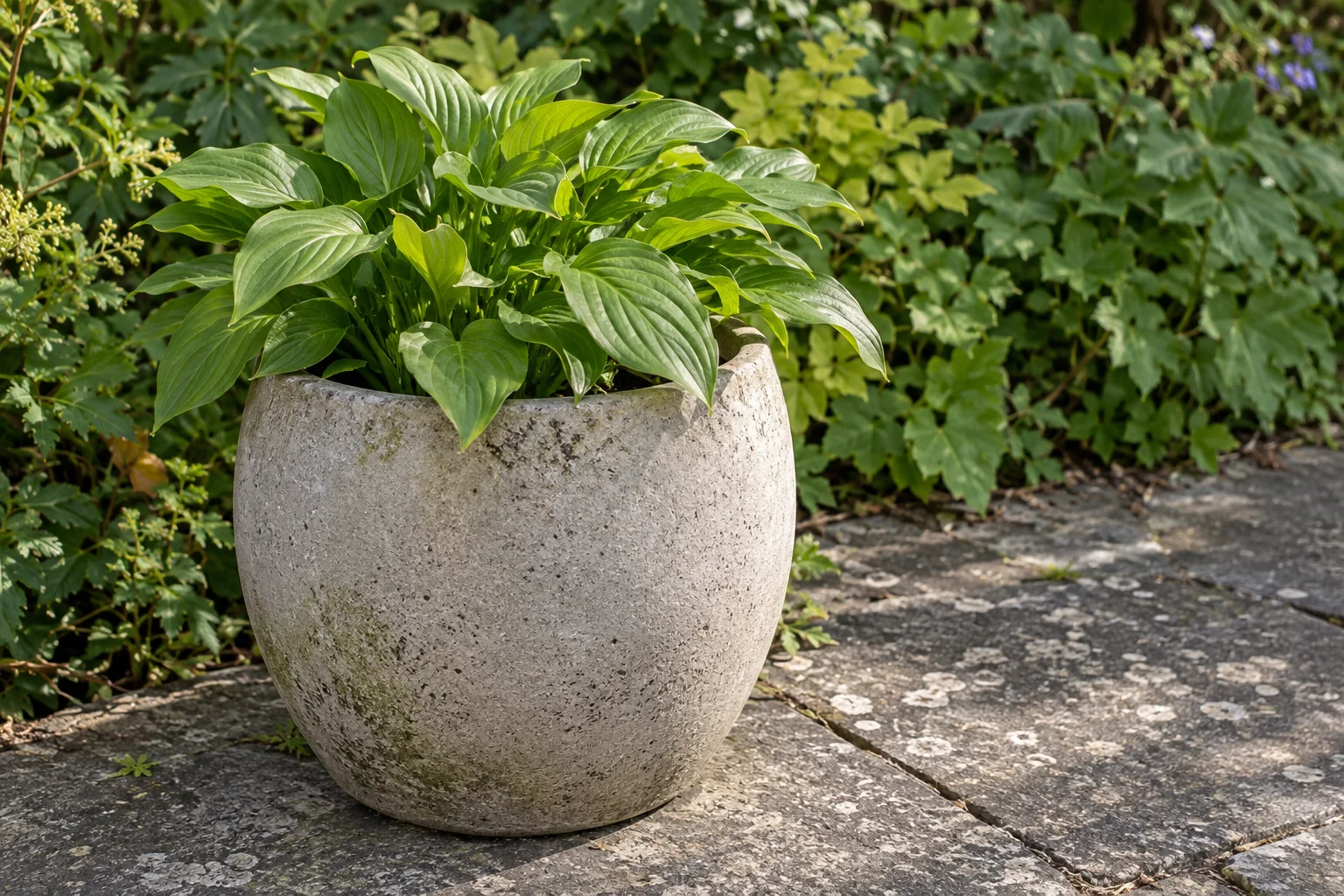
Try one rounded planter as the focal object. Position it where you can see its outline against the background, then leave a little visible ground around its base. A row of smaller ornaments close beside it can make that shape harder to read. Move the extras aside temporarily and compare the view.
Keep existing foliage in the picture. Let leaves overlap a little of the rim while leaving most of the pot visible. Green provides a living contrast to the cool surfaces; you do not need blue flowers or special seaside plants to complete the palette. Use plants that already grow well in your garden for the first trial.
Check the arrangement from the place you usually look at it. If the pot disappears into the border from the kitchen window, changing its position slightly may help more than adding another object. Keep the working route clear and leave access for watering. The decorative choice still has to share space with ordinary garden jobs.
Compare the mood before committing to a finish
For a warmer use of similar garden objects, the Mediterranean garden guide starts with terracotta. Coastal takes the cooler direction. Browse Coastal in the Gardenly style gallery and apply it to a photo of your garden to explore the overall colour balance.
The image model is instructed to leave the house, hardscape, camera angle and lighting unchanged. That is not guaranteed, so compare the result with the original. Use it to judge the broad proportion of blue, grey and green, then check the actual finish with a real sample outdoors. A render cannot establish an exact colour match or whether a plant suits your site.
Pick one change you can name, such as a less saturated blue pot or more visible grey around its base. Try that change in the garden before ordering anything else.