

The best patio furniture for small spaces is not always the smallest set in the shop. It supports what you actually do outside, leaves a clear route from the door and does not become a storage problem every time the weather turns.
Start with one ordinary use, such as breakfast for two or an hour with a book. Then compare each piece in motion, not only by the size on its product page. Chairs and tables need room around them. Folding furniture still needs somewhere to go when it is folded.
Choose the use before the furniture type
A compact patio rarely needs a complete matching suite. It needs enough furniture for the activity that happens most often.
If you eat outside several times a week, a small table and two chairs deserve the central space. Keep a light spare chair indoors for an occasional guest. If the patio is mainly a place for coffee, two generous chairs with a small surface between them may be more useful than a dining set. For one reader, a comfortable chair and a side table can be enough.
Settle the layout first. Our guide to small patio garden ideas explains how to protect the main route and group planting before you shop. Then ask which furniture form does the chosen job with the least fuss.
Measure the furniture while someone is using it
Shop photographs show chairs tucked neatly under tables. People do not sit that way. Pull a chair back, open the patio door and walk past with a tray. Those movements show the true footprint.
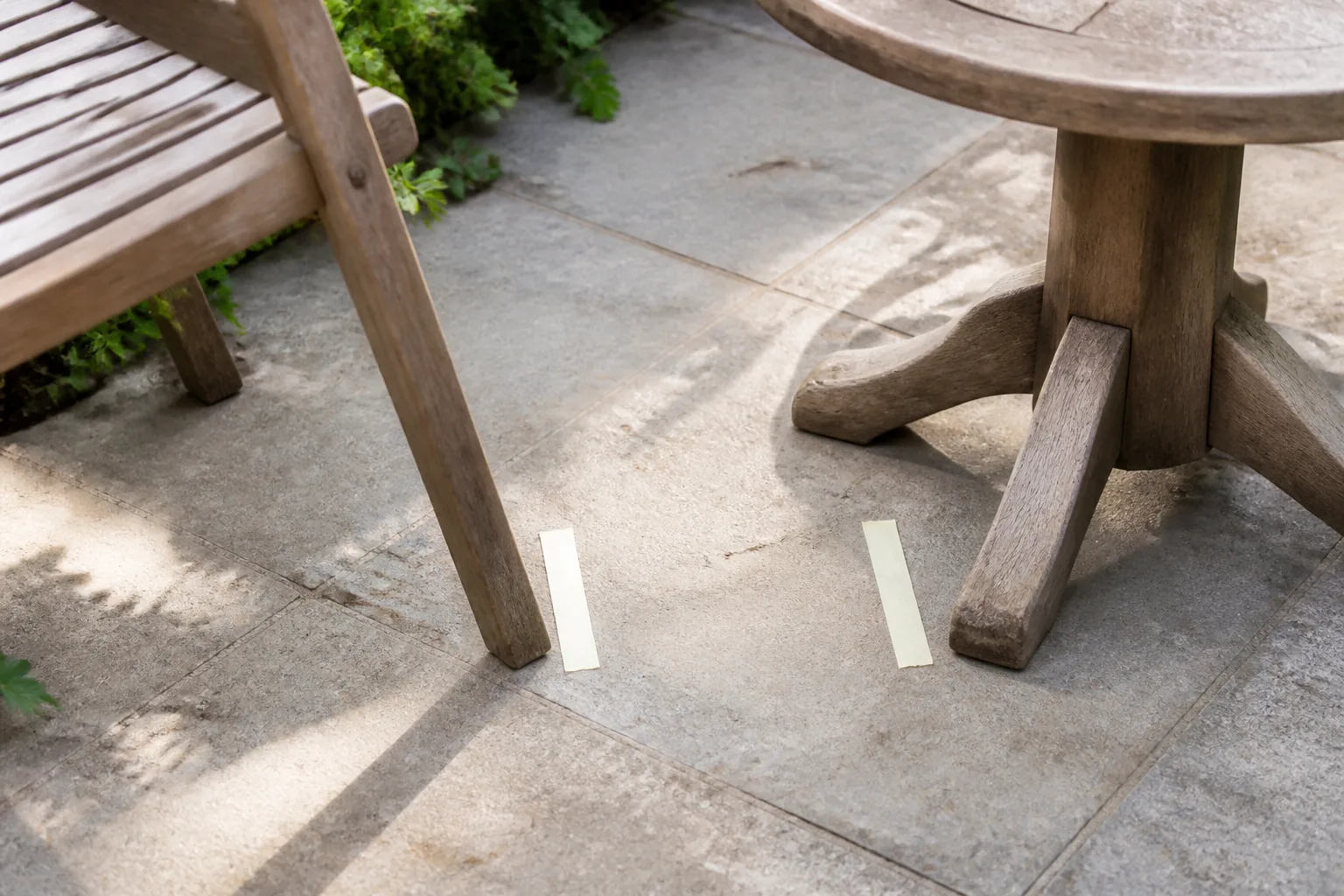
Use tape or flattened cardboard to mark the furniture on the paving. Add the space needed to sit down and stand up, then test the route to the gate or storage. A round table can soften a tight turn because it has no corners. A narrow rectangular table may fit better against a wall. The route decides.
Check the legs as well as the top. Corner legs can make the end seats awkward. A central pedestal frees the chair positions but may reduce foot room. Armchair arms can stop the chairs from sliding under the table. These details matter more than a few saved centimetres in the catalogue.
Folding, stacking or fixed: pick the honest option
Folding furniture works when you will really fold it and have a dry, accessible place to store it. If two chairs must travel through the house and wedge behind a wardrobe, they will probably stay open. You have accepted less comfort without gaining floor space.
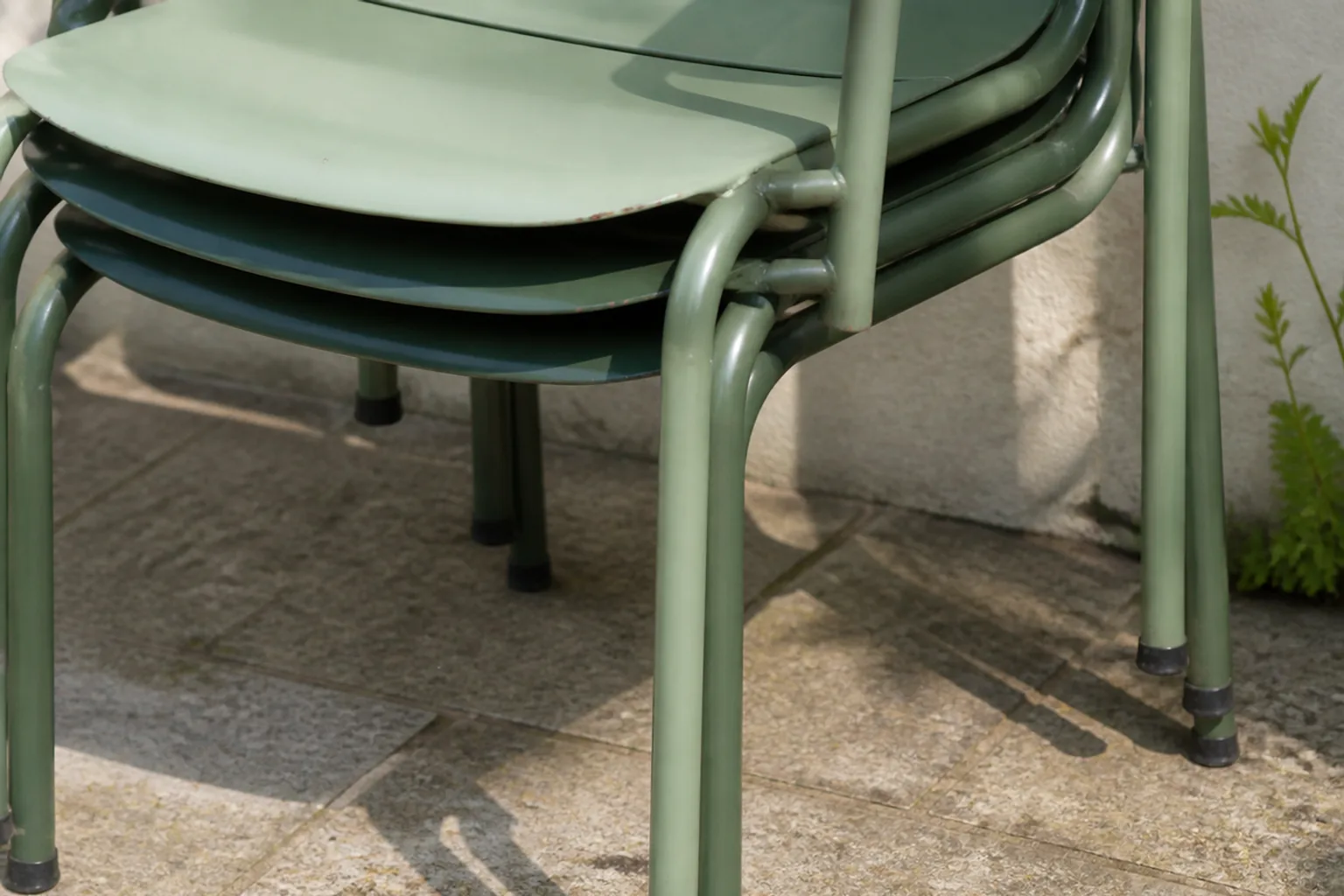
Stacking chairs suit a patio that changes between daily use and occasional company. Test how stable the stack is and how much height it needs. A fixed bench can be better for a narrow edge because it does not move into the route, but it also commits that strip of paving to one purpose.
Avoid clever features that add work. An extending table is useful only if the open table fits and the extra leaves have a sensible home. A storage bench helps only when its lid can open without moving every pot. Simple furniture is ready when you step outside.
Count storage as part of the footprint
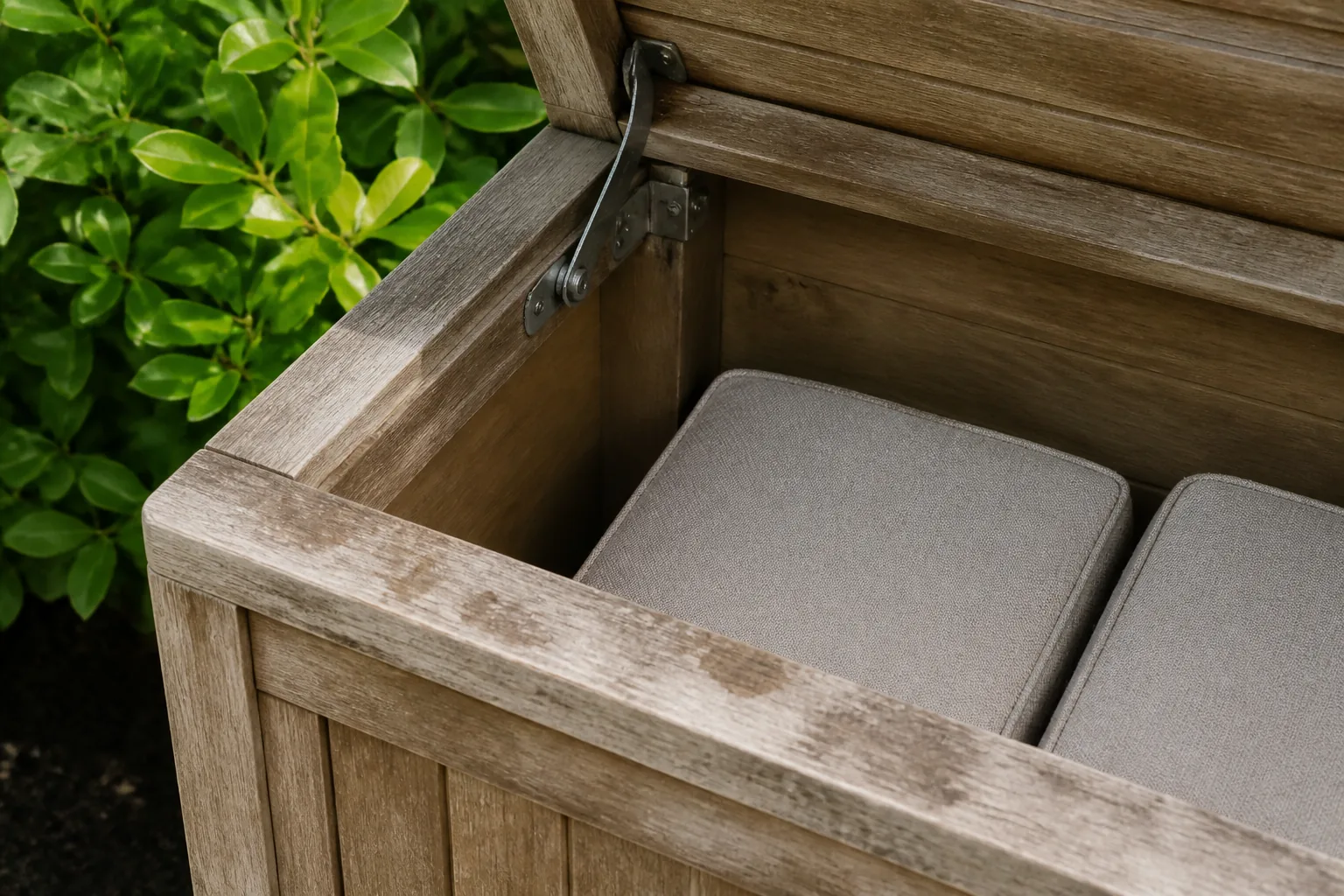
Cushions and folded pieces do not disappear. Decide where they go before you buy. A bench with dry storage can combine two jobs, but check whether rain can enter around the lid. A slim cabinet may use less floor than several small boxes collected over time.
Heavy furniture can stay put, but you still need to clean around it and protect the surface below. Light furniture is easier to move, though it may need securing in exposed weather. Choose a material you are willing to clean, cover or bring inside. The low-maintenance option is the one that suits your patio, not the one with the most confident label.
Compare visual weight before you commit
Two pieces with the same measurements can feel very different. Open chair backs, visible floor and a short material palette usually read more lightly than solid sides, thick frames and several unrelated finishes. That does not mean every item must be pale or spindly. One substantial chair can look calmer than three small pieces scattered around it.
A photo helps you judge that balance. Gardenly can redraw planting, beds, lawn and garden furniture in a chosen style over a photo of a planted patio. The model is instructed to keep the house, walls, paths, paving, camera position and lighting unchanged. That is an instruction, not a guarantee, so use the result to compare the amount and visual weight of furniture rather than to read exact dimensions.
Photograph the patio from the place you usually see it. Browse the Gardenly styles and compare one direction with the original. Keep your measurements on paper. The render shows whether a chair or table looks too dominant; the tape on the paving shows whether it fits.
The useful choice is the one you do not have to negotiate with every day. If the door opens, the route stays clear and the main seat is comfortable, the patio has enough furniture. Empty paving is allowed to remain empty.