

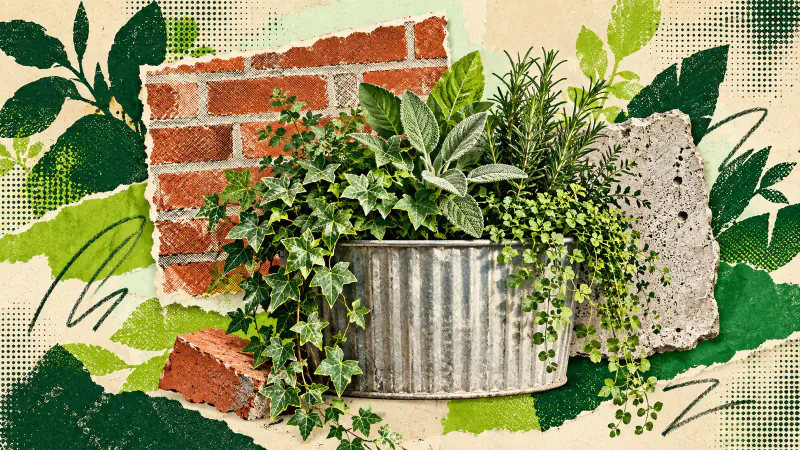
An industrial garden starts with materials you can recognise: the uneven colour of brick, a plain concrete surface, the folded rim of a metal planter. Leave some of that character visible and bring foliage close enough to soften it. An existing wall and one useful object can give you plenty to work with.
Gardenly describes its Industrial style as "Raw aesthetic with exposed materials." For a home garden, that can mean treating a brick wall as part of the view instead of covering it with decoration. The interest comes from the surface itself. You do not need to make the space look like an abandoned factory.
Start with the surface already there
Look closely at the brick or concrete you see from your usual seat. Brick may have several colours within one small patch; concrete may show a fine aggregate or faint marks from its original finish. Pick the surface you like enough to leave exposed. This gives you a starting point for the objects and plants nearby.
A warm red wall can sit behind a dull grey planter. Pale concrete can give dark green leaves a clear background. Try holding an existing pot against each surface before buying anything. Notice whether its colour competes with the background or lets you see more of it. The difference is easier to judge outside than from separate product photographs.
Exposed does not have to mean distressed. If the wall already has character, adding imitation rust, factory signs and ornamental pipework can make it feel like a stage set. Leave room to see the actual brick. This is a choice about appearance; any damaged masonry or structural work needs its own assessment.
Give one metal object a real job
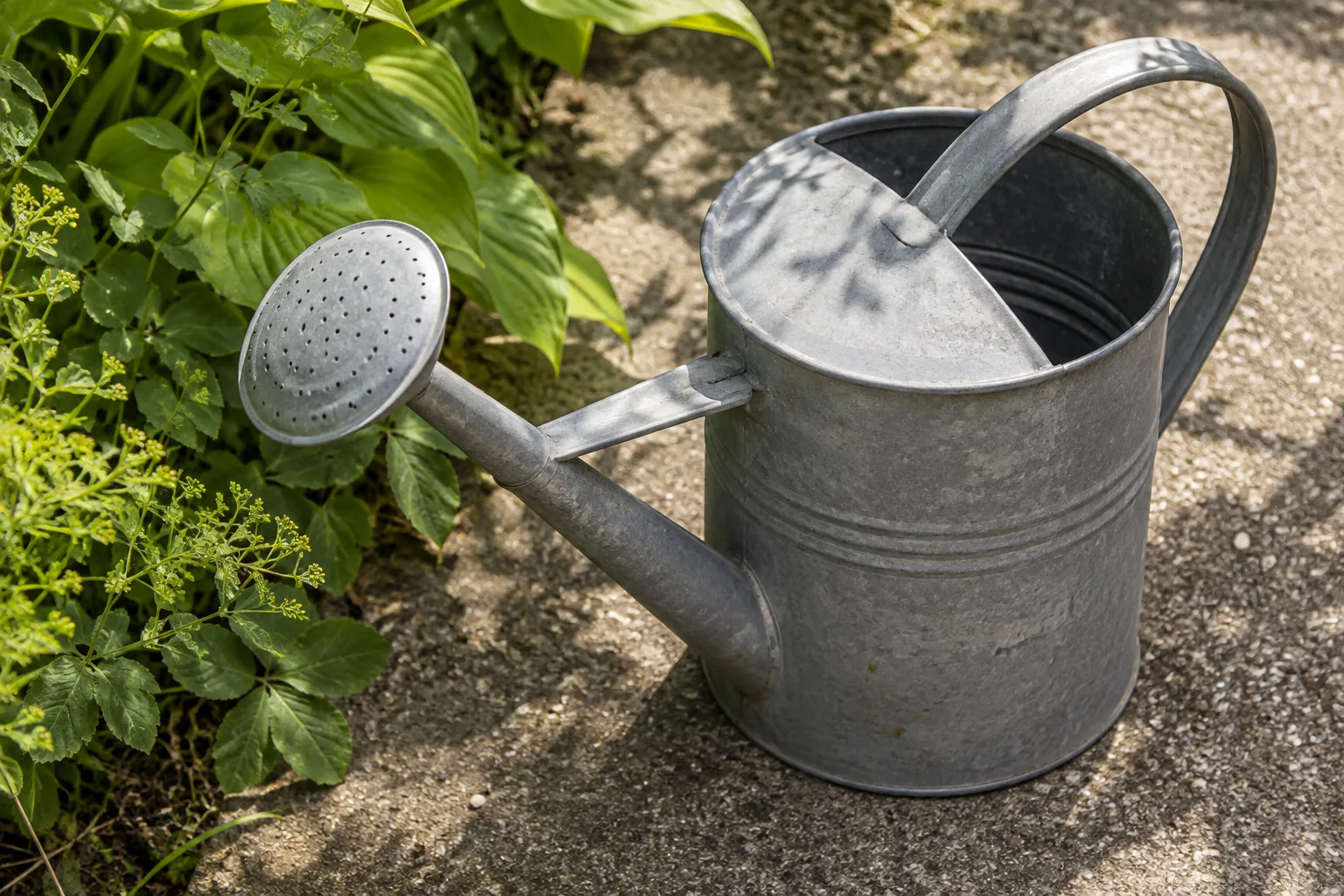
A planter is a straightforward place to introduce metal because its job is obvious. A watering can you regularly use works too. Choose something you would still want without the industrial label, then look at how its finish sits against the existing surface.
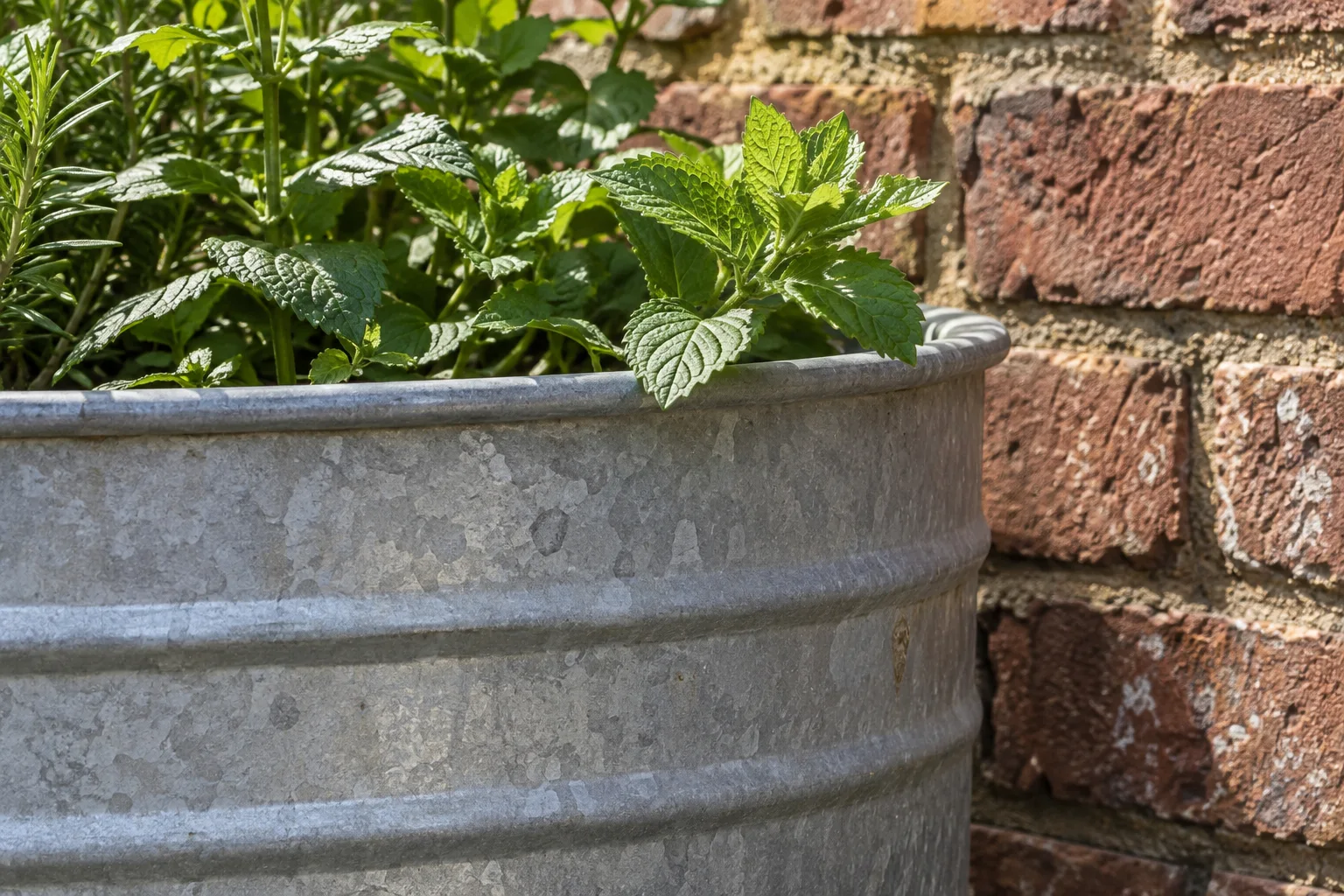
The galvanised planters in this Herne Hill project show how a varied metal finish can sit against brick. You can borrow that small material relationship without copying the garden. A folded edge or ribbed side provides enough detail; several competing finishes in the same corner may be more than you need.
For a planter, check the manufacturer's intended use, drainage and care instructions before choosing it. A decorative metal container is not automatically ready for planting. Judge the size beside the wall as well: a tiny pot can disappear against coarse brickwork, while a larger plain object gives you a surface you can actually see.
Let leaves overlap a little
Bring foliage near the metal so the two surfaces meet in the view. A broad leaf can interrupt a straight rim; fine stems can sit against a plain concrete background. Leave part of the object uncovered. If every face disappears beneath growth, you lose the material contrast you chose it for.
Begin with plants that already do well in your garden, then consider their shape. You might move an existing container beside the metal object to test the effect. Look at it from your chair and through the window. A combination that reads clearly close up may disappear from indoors, where a bolder leaf shape can be easier to see.
Use the material details in the photographs to compare textures. Choose actual plants for your light, soil, climate and the space they will need as they grow. Leaf shape alone is a poor reason to put a plant somewhere it will struggle.
Preview the material balance
If you are deciding between Industrial and Modern, our modern garden ideas guide concentrates on geometry and deliberate material joints. Here, the decision is how much of an existing raw surface to show and which useful object belongs beside it. An industrial treatment can stay leafy and domestic.
Choose Industrial in the Gardenly style gallery and use a photo that includes the existing brick or concrete. The app instructs the image model to leave the house, hardscape, camera angle and lighting unchanged while redrawing the garden. Check the result against your original: that instruction is not a guarantee.
Look for one material relationship worth trying with what you own. If the image replaces your wall or invents elaborate metalwork, set those parts aside. Take the useful detail to a landscaper or supplier, with your real measurements and a photograph of the surface it needs to sit beside.