

AI garden design is useful when you need to see possible directions on a photo of your own yard. A garden designer is useful when you need to turn a preferred direction into a plan that responds to the real site. In most projects, the image comes first and professional planning comes before construction.
The two tools answer different questions. An AI render asks, "Could this style suit my garden?" A designer asks, "How should this work here, and what will it take to build?" One can make the first conversation quicker. It cannot replace the site knowledge behind the second.
Use AI while the brief is still vague
Early garden ideas are often hard to explain. "More relaxed" might mean curved borders to one person and dense planting to another. A render gives you something specific to accept, reject or mark up.
Gardenly starts with one photo and a chosen style. The image model is instructed to redraw the planting, beds, lawn, garden furniture and decorative elements while leaving the house, hardscape, camera position and lighting unchanged. That is an instruction, not a guarantee. The result is a visual direction, not a measured drawing.
Try a few directions that are meaningfully different. Compare them with the original photo and note the decisions that keep winning: a larger border, less lawn, a seat nearer the house or a quieter material palette. The useful output is not the prettiest image. It is the short list of preferences you can explain.
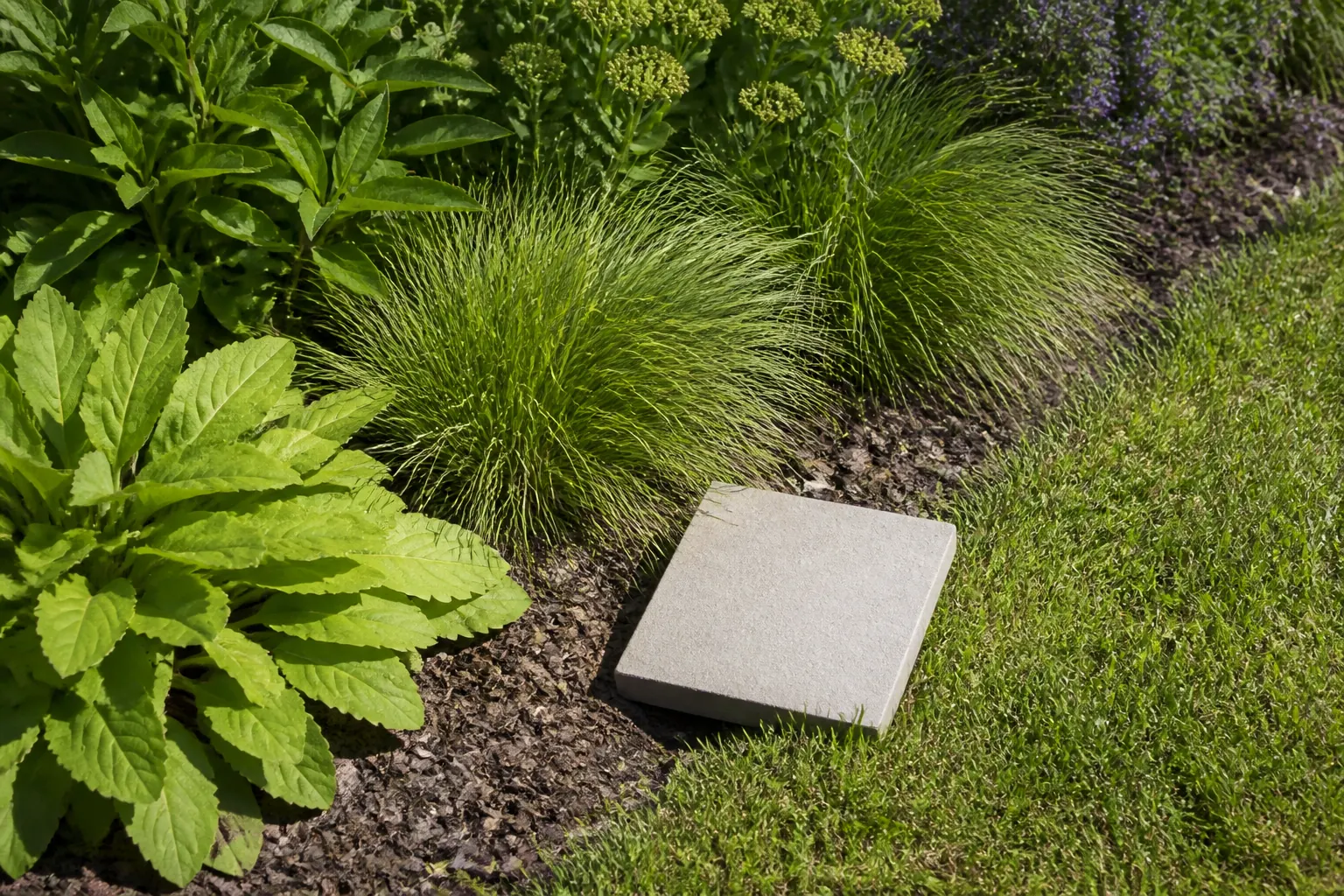
If you want the mechanics and limits in more detail, read how an AI garden design app works.
Bring in a designer when the site must answer back
A garden designer can inspect what the image cannot. Levels, drainage, access, soil, shade, boundaries and existing plants can all change what is sensible. A designer can also work out dimensions, routes, material choices and a planting scheme that accounts for mature growth and maintenance.
A convincing render can still be impractical. A path that looks generous in a picture may pinch beside a door. A full border may need years to reach that size. A tree placed for composition may be wrong for the soil or too close to a structure. Those are planning questions, not image questions.
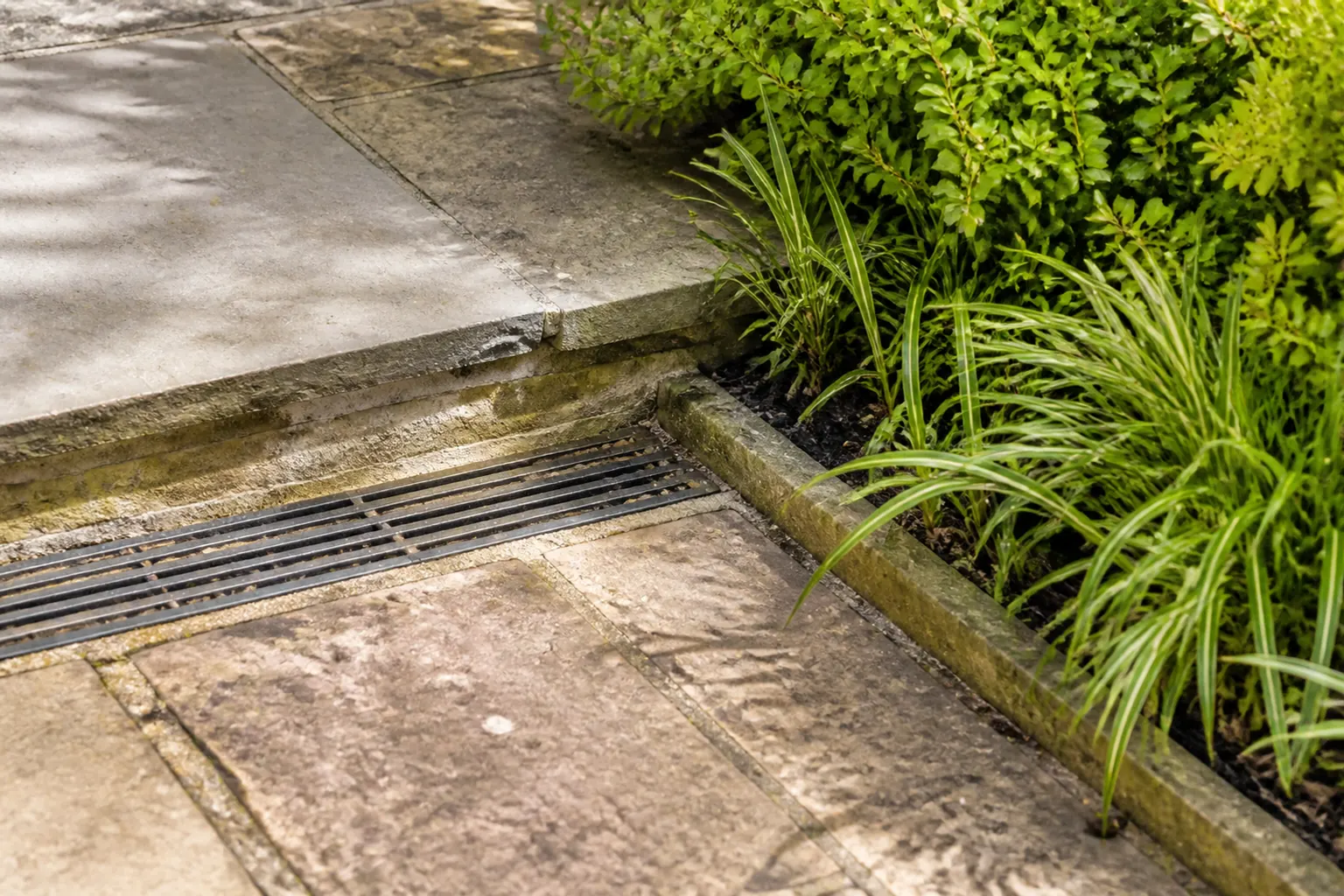
The professional also helps connect decisions. Moving a seating area can alter the path, which changes bed depth and access for materials. An image can show the revised composition, but it does not coordinate the work.
Make the handoff useful
Do not ask a designer to copy an AI image exactly. Treat the render as a marked-up brief. Bring the original photo, one or two preferred versions and a few notes:
- what must stay;
- which problem the project must solve;
- which parts of each image you like;
- what you do not understand or trust;
- how much maintenance you will really do.
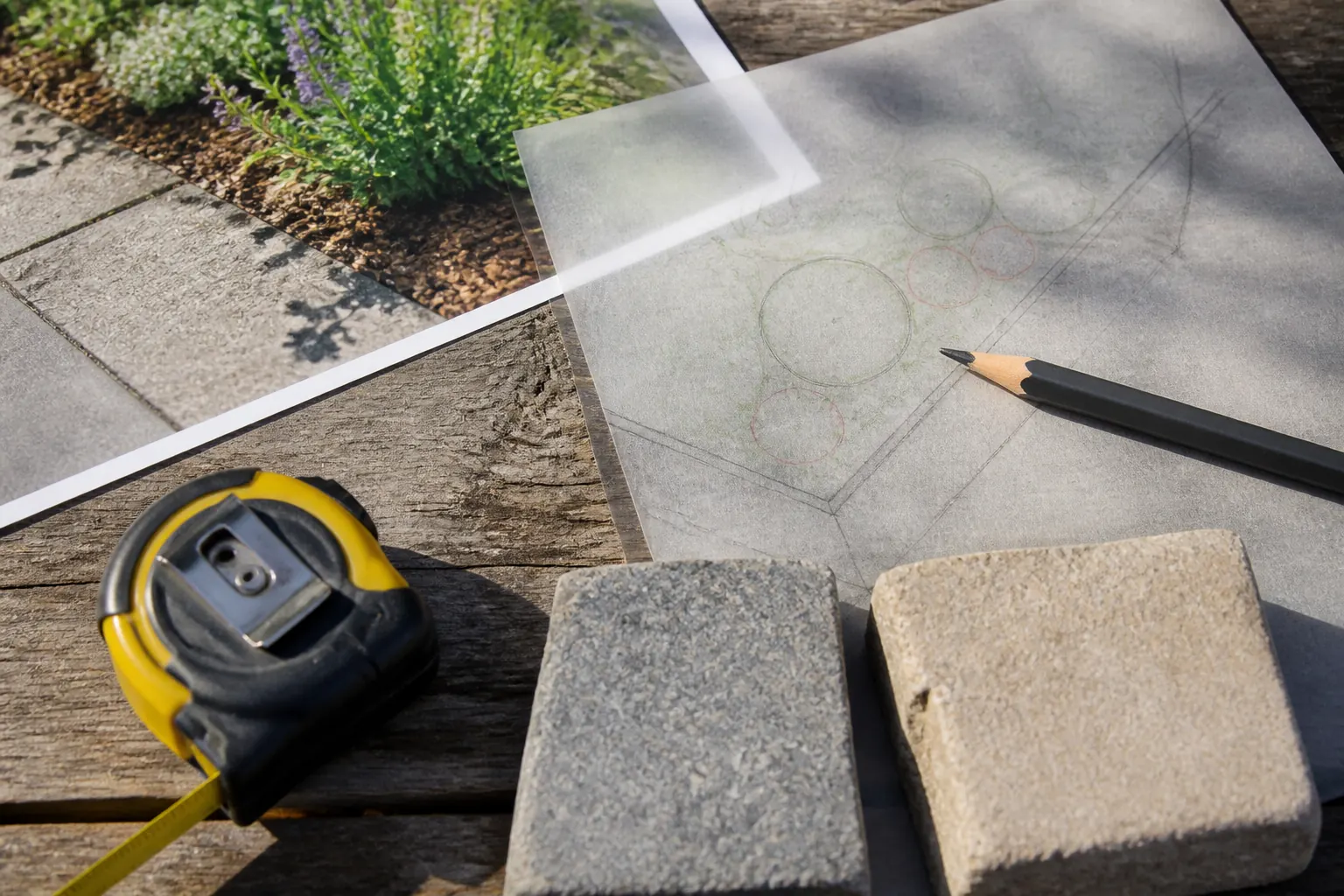
Point to decisions, not moods. "Keep this clear route from the kitchen" is more useful than "make it feel effortless." If two renders appeal for different reasons, say so. A designer can often keep the planting character from one and the practical layout from another.
Our guide to questions to ask a landscaper can help you prepare the site, scope and maintenance points before the first meeting.
When to skip the render and call first
Start with a professional if the main problem is technical rather than visual. Persistent water, unstable walls, large level changes, uncertain boundaries or major tree work need site assessment before you become attached to a picture. The same applies when you already know the direction and need a plan, specification or planting advice rather than more options.
For a mainly cosmetic rethink, an image can still save time. Browse the Gardenly style gallery, test a small number of clear alternatives and write down what each one teaches you. Then take that evidence to the person who will measure, check and plan the real garden.
That sequence gives the designer a clearer brief without asking the image to carry decisions it cannot make.