


A landscaper quote is useful only when you can see what the price includes. Put competing quotes beside the same brief, then compare the work, preparation, materials, allowances, waste removal and process for changes. The lowest total can cover less work; the longest document can still leave one expensive assumption unstated.
Start by making a simple comparison sheet. Give each quote one column and each part of the job one row. Mark an item as included, excluded or unclear. That small exercise turns three different writing styles into one readable decision.
Make sure every quote answers the same brief
Before you compare figures, check that each landscaper priced the same garden. One may have included the side path, another only the main patio. One may plan to keep a sound retaining edge while another expects to replace it. These are different projects, even if the headings look similar.
Write the agreed outcome at the top of your comparison: what stays, what goes and which areas will change. Add practical limits such as access through the house, working hours or a feature that must not move. If a quote changes the brief, note the reason instead of quietly treating it as an equivalent option.
If you have not settled that brief yet, use these questions to ask a landscaper before requesting revised documents.
Look underneath the visible finish
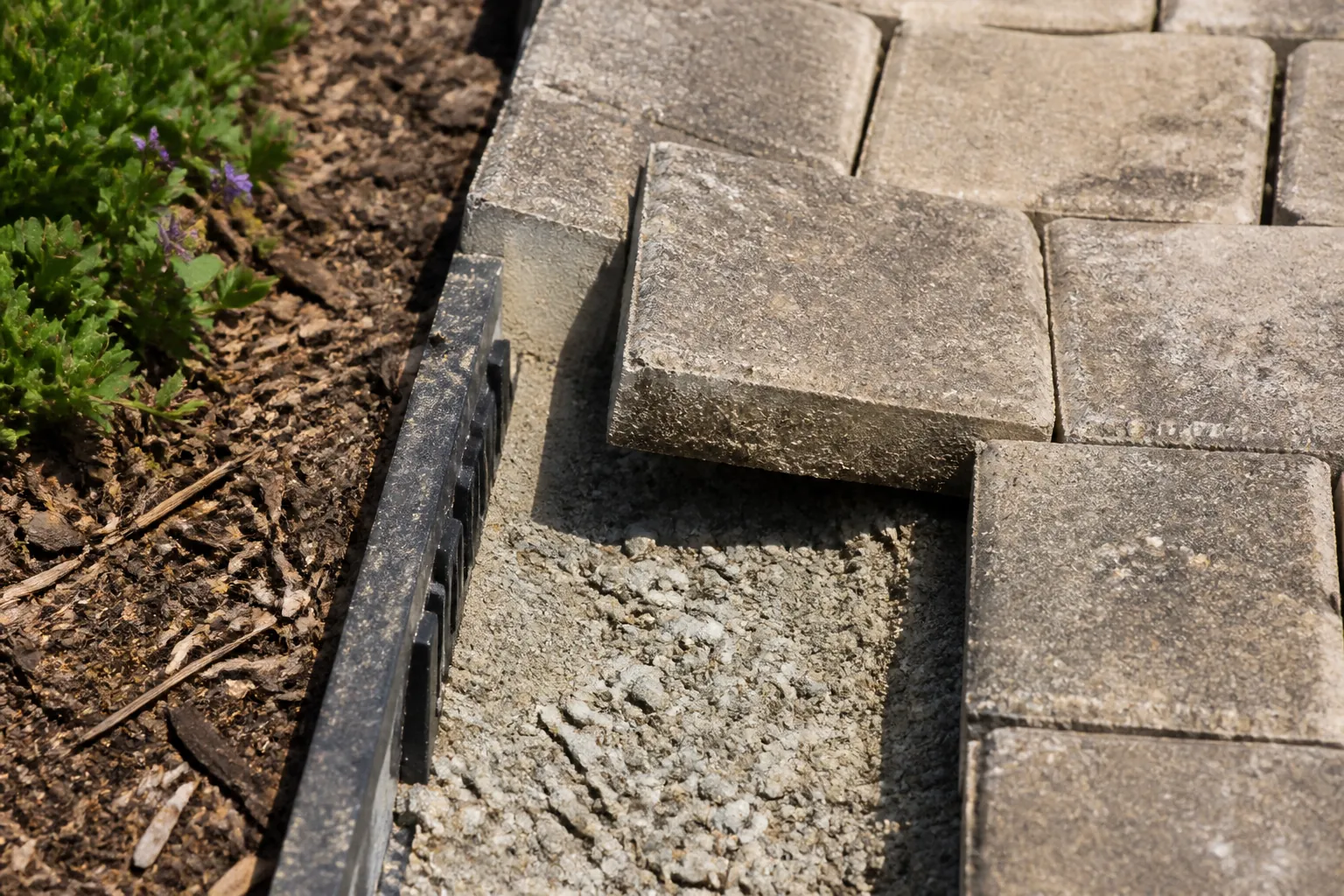
The finished paving and planting are easy to picture. Preparation is easier to miss. Read for demolition, excavation, ground preparation, drainage, edging and protection for areas that stay. A line for laying new paving does not automatically tell you who removes the old surface or what happens to the material underneath it.
For each area, follow the work from its current state to its finished state. If the route has a gap, ask for the missing step to be confirmed in writing. Do not assume that a task is included because it feels necessary.
Access matters here too. Check whether the quote includes moving materials through a narrow passage, protecting indoor floors or using smaller equipment. The document should match the actual route into your garden.
Compare materials by specification, not label
“Stone paving,” “timber edging” and “new plants” are categories, not full specifications. Look for useful details: product or material type, finish, size, quantity and any agreed alternative. For planting, check whether the document describes quantities and plant sizes rather than only naming a broad planting area.
Some choices may stay as allowances until you select a product. An allowance is not necessarily a problem, but it must be clear. Record what the allowance covers, which items sit outside it and what happens if your final choice costs more or less. That lets you compare two provisional sums without pretending they are fixed specifications.
Also check what happens to delivery packaging, excavated soil, old paving and green waste. “Site clearance” can mean different things. Ask where waste goes and whether removal is part of the quoted scope.
Record exclusions, timing and changes
Make a separate list of exclusions. Common gaps are easier to discuss when they are visible together. You may decide to handle one task yourself, keep it for a later phase or ask every landscaper to add it. The important part is that the decision is deliberate.
Then compare the proposed sequence and any dependencies. The quote should help you understand which decisions are needed before work starts and which can wait. Ask how changes are approved after the job begins, how added work is described and when you will see its effect on the total. A short written process is much easier to manage than a string of remembered conversations.
A Gardenly render can help when two quotes interpret the visual direction differently. Share the original photo and one or two chosen renders as a picture to discuss, not as a measured plan or planting specification. Gardenly is instructed to keep the house, hardscape, camera and light unchanged, but that is not guaranteed. The Gardenly FAQ explains what the image can and cannot settle.
Choose the quote whose scope you understand and whose open questions can be resolved. If two documents still describe different jobs, ask for revisions before you compare their totals again.