

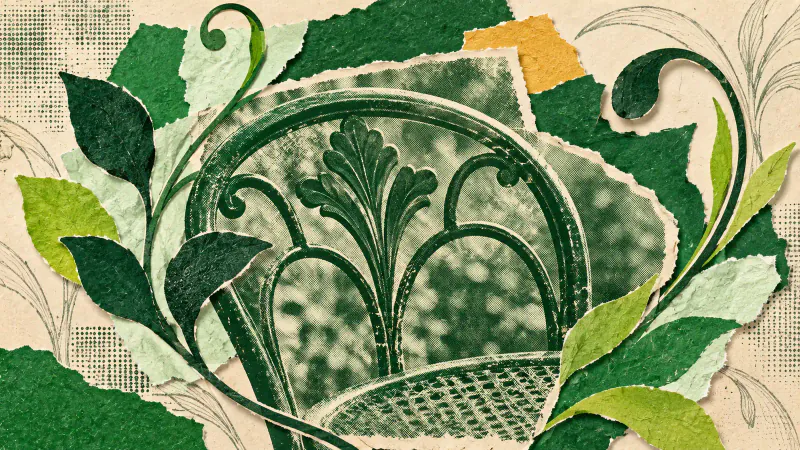
You can give an art nouveau garden a starting point with one useful object whose curves suggest stems or leaves. A chair back with a flowing outline beside upright foliage is enough to try the idea. Keep the surrounding surfaces fairly plain so you can see how the made shape and the growing plant relate.
Gardenly describes its Art Nouveau style as "Organic curves with floral motifs." The V&A traces the style's flowing S-curve to studies of natural forms and shows how designers used it in ironwork. Borrowing that detail for a garden is a practical interpretation of the style. It does not require a period house or a complete redesign.
Choose a curve in something you use
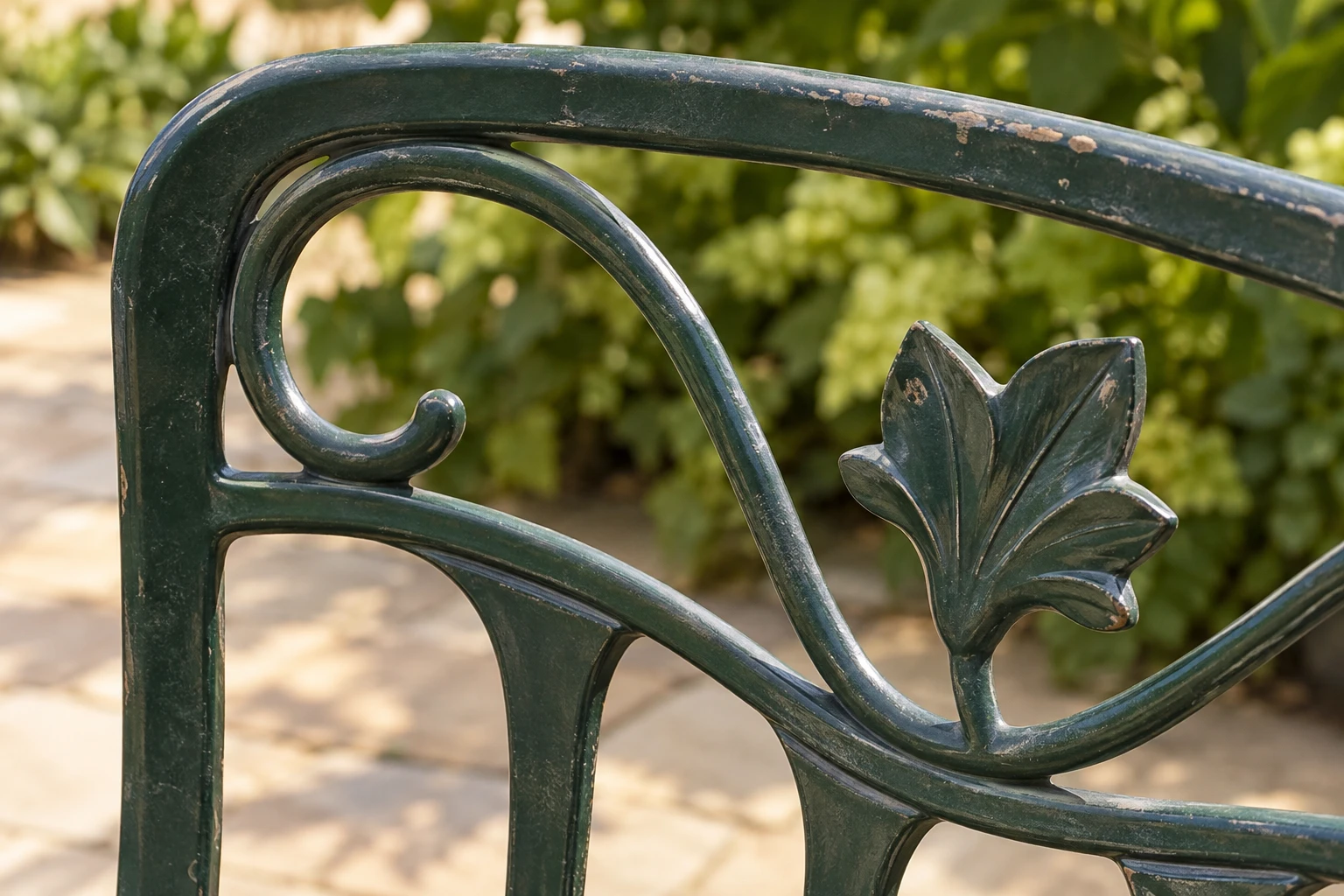
Look at the shape before the finish. A metal chair might have a back that rises like a stem and turns outwards into a leaf. Follow that line with your eye: does it continue smoothly, or does a cluster of small scrolls make the shape hard to read? For this approach, choose the object with the clearest outline.
Then give it an ordinary job. A chair needs to be comfortable where you want to sit. A plant support needs to fit the pot or border it serves. An ornate object that keeps getting moved out of the way is a poor starting point, however appealing the photograph.
Check that the item is suitable for outdoor use and follow its care instructions. You can enjoy the curved shape without needing to establish that the piece is an antique.
Put a real leaf shape beside the ornament
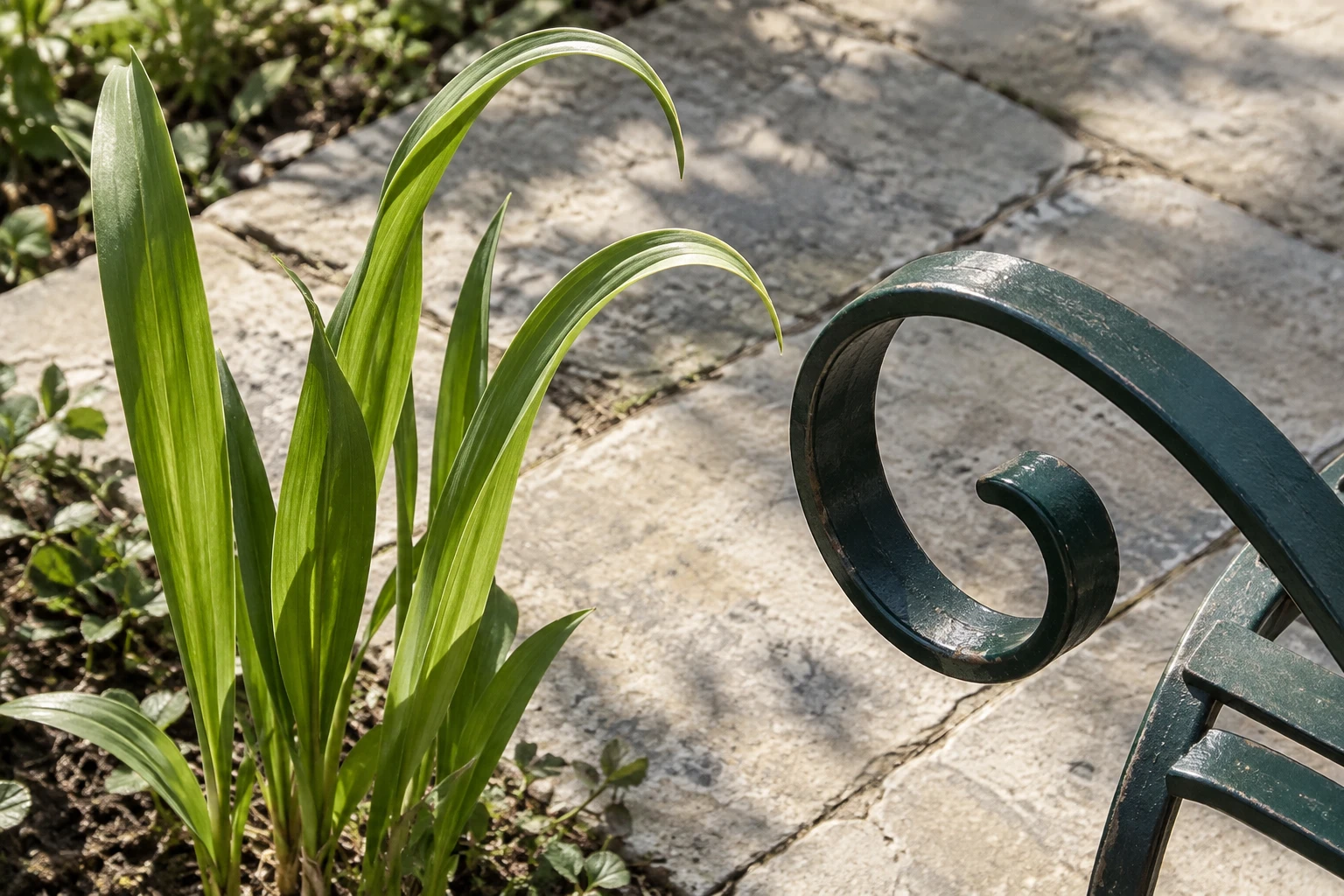
Use the plants you already have as a comparison. Long, narrow leaves can echo a slender metal stem; a broad leaf might answer a wider curve. Bring a potted plant near the object and look at the outlines together. You are testing a visual connection before deciding to change the planting.
Leave a little separation so both shapes remain legible. If leaves fill every opening in the chair back, the metal detail can disappear. Move the pot slightly sideways and look again. The relationship may work better when the plant overlaps just the lower part of the object.
Choose plants for the actual light and growing conditions in your garden. A leaf you admire in a photograph is not a reason to put an unsuitable plant beside the chair. Try the arrangement with an existing pot first.
Give the outline a quiet background
A pale wall, plain paving or a simple patch of foliage can make a curved object easier to see. Test it against the surfaces already there. Dark metal may stand out against light stone, while dense foliage behind it can hide the same line. Move the chair a little rather than assuming the background needs replacing.
Keep the surrounding decoration modest while you make that comparison. A busy cushion pattern can interrupt the chair's outline; try removing the cushion briefly to see whether the shape reads more clearly. You can put it back once you know what you prefer.
If it is the exposed metal and weathered surface that interest you most, the industrial garden approach explores those materials. Here, the useful test is whether the contour suggests something growing, even when you ignore its colour and finish.
Check the detail from your usual viewing distance
Step back to the doorway or window where you normally see this part of the garden. A small floral detail that looks convincing up close may disappear from there. The larger curve of the chair back may still be visible, which gives you a better reason to choose that object than a tiny decorative flourish.
Check the view from the seat, too. Nearby leaves should leave room to use the chair. Keep your existing route clear when trying positions, and resist adding another ornate piece just to make a distant view busier. Sometimes moving the first object a little does more.
Preview Art Nouveau, then inspect the proposed shapes
Find Art Nouveau in Gardenly's style gallery and try it on a photo of your own garden. Look for the broad relationship between curved furniture and planting. Notice whether an ornament is still visible against its background, and whether the plants in the picture support the same flowing outline.
The model is instructed to leave the house, hardscape, camera angle and lighting unchanged. That instruction is not a guarantee, so compare the result with your original photo before using it as a reference.
Treat the render as a picture to discuss with a landscaper or to guide your search for an outdoor object. It cannot tell you whether a pictured chair is comfortable, how its joints are made or whether a plant suits your soil. Those checks still belong in the real garden.